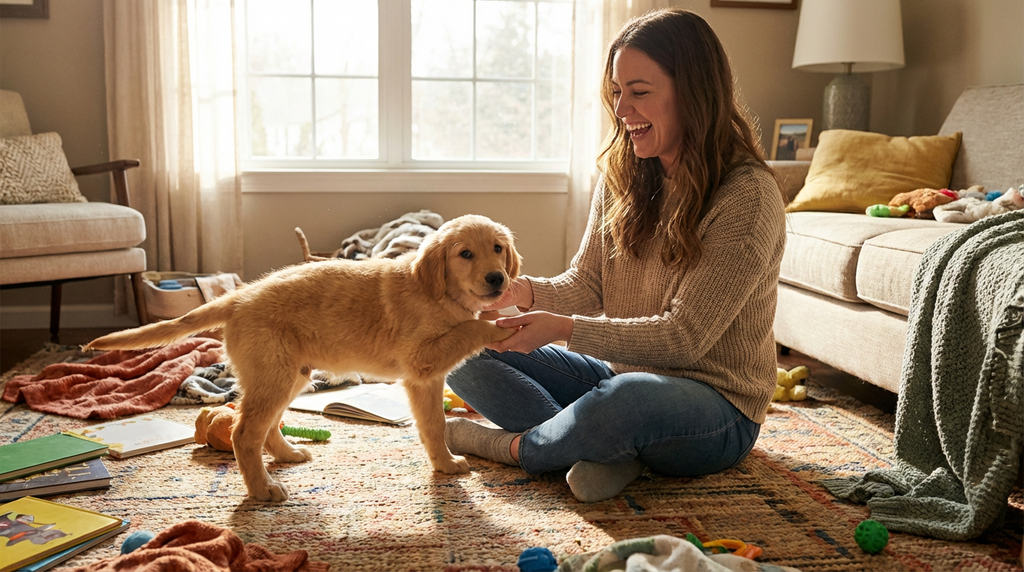
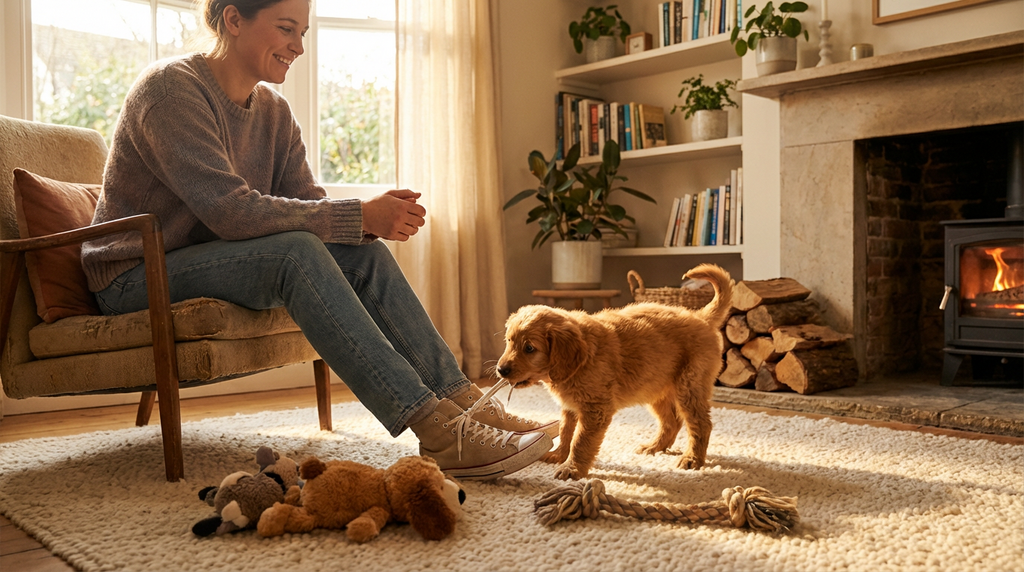
If your puppy is biting your hands, chewing your shoes, or turning playtime into a wrestling match, you’re not alone.
Puppy biting is one of the most frustrating challenges new dog owners face. It can feel embarrassing, overwhelming, and sometimes even discouraging. You wonder:
“Is my puppy aggressive?”
“Am I doing something wrong?”
“Will this ever stop?”
Take a breath.
The good news is this: most biting is completely normal and completely fixable.
In this guide, you’ll learn how to stop the biting fast. The method uses a calm correction technique. It works in days, not months. This approach does not involve yelling, hitting, or damaging your bond.
What Is the Calm Correction Method?
The Calm Correction Method is a structured, positive training approach that teaches your puppy:
- What behavior is unacceptable
- What behavior earns rewards
- How to control impulses
Instead of reacting emotionally when your puppy bites, you respond with calm consistency.
Why does this work?
Because puppies don’t learn from chaos. They learn from clarity.
When you yell, push them away, or engage in rough reactions, many puppies interpret it as play or attention. The behavior actually gets reinforced.
Calm correction removes the reward.
It replaces it with structure.
And structure builds obedience.
Why It Matters Now (Before It Becomes a Habit)
Here’s something many owners don’t realize:
Every time biting gets attention, it gets stronger.
Puppies repeat behaviors that:
- Get a reaction
- Relieve boredom
- Release energy
- Feel rewarding
If biting becomes their default way to interact, it doesn’t simply disappear with age.
It evolves.
Nipping turns into harder mouthing.
Play biting becomes jumping and grabbing.
Chewing becomes destruction.
The earlier you interrupt the pattern, the faster you reset it.
That’s why acting now matters.
You’re not just stopping bites; you’re shaping your dog’s future behavior.
Why Puppies Bite in the First Place
Before correcting behavior, it helps to understand it.
Common reasons include:
1. Teething Discomfort
Puppies explore and relieve gum pain with their mouths.
2. Play Behavior
Littermates bite each other constantly. It’s normal social development.
3. Attention-Seeking
If biting gets eye contact, movement, or sound, it’s rewarding.
4. Overstimulation
Tired puppies often bite more.
When you understand the trigger, you can respond strategically instead of emotionally.
The Calm Correction Method: Step-by-Step
Let’s break this down into simple, actionable steps.
Step 1: Freeze and Remove Attention
When your puppy bites:
- Stop moving right away.
- Say a calm, firm “No” or “Too bad.”
- Stand up and turn away for 10–20 seconds.
No eye contact.
No talking.
No pushing.
You’re teaching: biting ends interaction.
This is powerful because attention is the reward they want most.
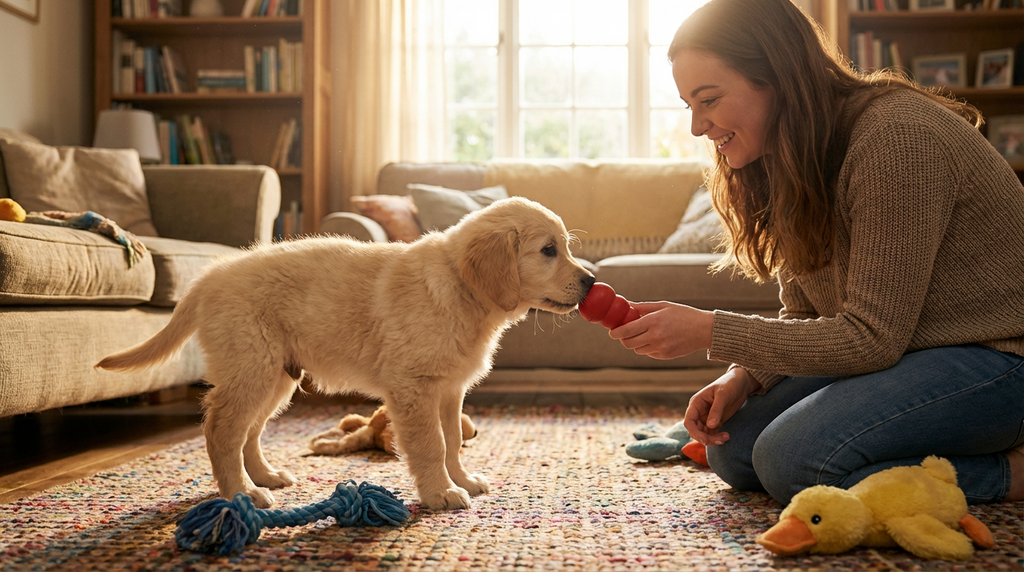
Step 2: Redirect Instantly
After the pause, offer an appropriate chew toy.
When they chew the toy instead, praise warmly.
This teaches:
“Biting hands = play stops.”
“Chewing toys = play continues.”
Dogs learn fastest when shown what to do, not just what to stop.
Step 3: Reward Calm Play
The moment your puppy licks instead of bites, sits instead of jumps, or engages, gently reward it.
Reinforce:
- Calm energy
- Soft mouths
- Controlled play
Positive reinforcement accelerates behavior change dramatically.
Step 4: Manage Energy Levels
Many biting episodes happen when puppies are:
- Overtired
- Overstimulated
- Under-exercised
Make sure your puppy gets:
- Short walks (age-appropriate)
- Mental stimulation
- Scheduled nap time
A tired puppy is a calmer puppy.
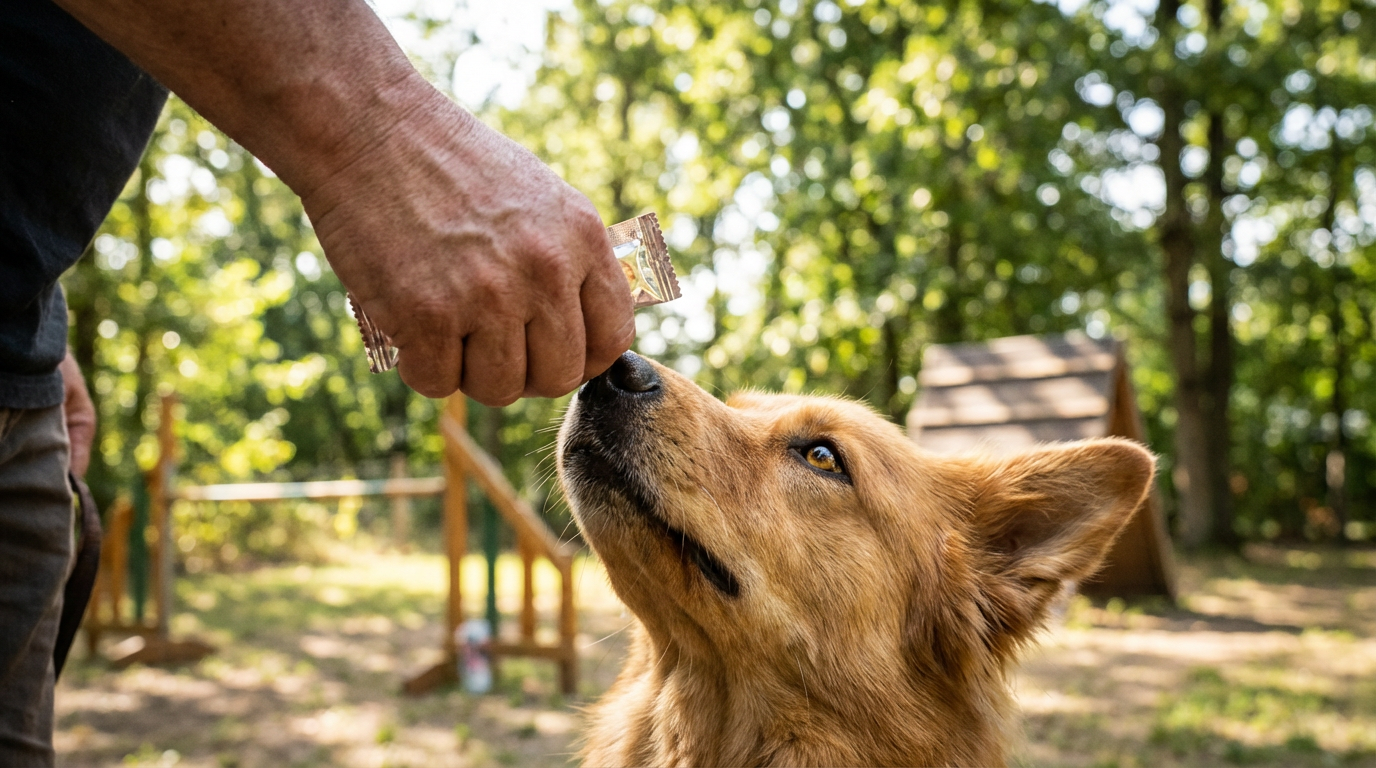
Step 5: Teach “Leave It”
Impulse control commands are game changers.
To teach “Leave It”:
- Hold a treat in your closed fist.
- Let your puppy sniff.
- When they stop trying to get it, say “Leave it” and reward with a different treat.
This builds self-control that carries over into reduced biting.
What NOT to Do
Avoid these common mistakes:
❌ Yelling
❌ Hitting or tapping the nose
❌ Holding their mouth shut
❌ Rough play that encourages biting
❌ Inconsistent correction
These either increase fear or accidentally reinforce the behavior.
Calm leadership builds trust. Fear builds confusion.
How Fast Will You See Results?
With consistent application, many owners see improvement in:
- 3–5 days for reduced intensity
- 7–10 days for noticeable control
- 2–3 weeks for strong habit change
The key word is consistent.
Every interaction teaches something.
When you stay calm and structured, progress compounds quickly.
Imagine the Difference
Picture this:
Your puppy approaches gently.
Guests come over without fear of nipping.
You play without scratches.
Your shoes stay intact.
You feel confident instead of stressed.
That shift isn’t luck.
It’s leadership.
And it starts with calm correction.
When to Seek Extra Help
If biting is:
- Accompanied by growling and stiffness
- Triggered by resource guarding
- Directed aggressively without play signals
Then consult a certified professional trainer or behaviorist.
Most puppy biting is normal. True aggression is rare, but it should be addressed properly.
The Fastest Way to Build Total Obedience
Stopping biting is just the beginning.
If you want:
- A thorough obedience roadmap
- Structured daily training guidance
- Proven techniques for barking, jumping, and leash pulling
- Step-by-step demonstrations
Then don’t stop here.
👉 Get the full puppy training system here:
The sooner you build structure, the easier everything becomes.
Your puppy isn’t “bad.”
They’re learning.
Make sure they’re learning the right lessons starting today.
FAQ Section
Stop the Biting Fast: The Calm Correction Method That Works in Days — Not Months
1. Is puppy biting normal, or is my dog aggressive?
Most puppy biting is completely normal and related to teething, play, or attention-seeking. True aggression is rare in young puppies. If biting includes stiff body language, growling over resources, or intense guarding, consult a professional trainer.
2. How quickly can the calm correction method reduce biting?
With consistent application, many owners see reduced intensity within 3–5 days. Noticeable control often develops within 1–2 weeks. Consistency is the key factor.
3. Should I yell or say “ouch” loudly when my puppy bites?
Yelling often excites puppies and can reinforce biting. A calm, firm correction followed by removal of attention is typically more effective and prevents overstimulation.
4. What if my puppy bites more when I ignore them?
If biting increases, it is an “extinction burst,” a temporary spike in behavior when a reward disappears. Stay consistent. The behavior usually decreases once your puppy realizes attention is no longer earned through biting.
5. Are chew toys enough to stop biting?
Chew toys are important, but redirection alone isn’t enough. You must also remove attention when biting occurs, so your puppy learns the clear difference between acceptable and unacceptable behavior.
6. When should I seek professional help for biting?
Seek professional guidance if your puppy:
- Bites hard enough to break skin regularly
- Shows guarding behavior over food or toys
- Displays aggressive posture or growling unrelated to play
Early professional intervention prevents long-term behavior problems.
Helpful Resources
If you’d like additional trusted guidance on stopping puppy biting and building healthy behavior habits, these two expert-backed resources are worth exploring:
For science-based training advice and behavior insights, visit the American Kennel Club (AKC) Guide to Stopping Puppy Biting. It provides practical tips on managing mouthing, teething, and early impulse control.
You can also review force-free training techniques. From the ASPCA Guide to Mouthing, Nipping, and Play Biting.
Which explains why puppies bite and how to redirect behavior safely and effectively.