Yes, Your Dog Can Learn Obedience Here’s Exactly How Long It Really Takes (And Why Most Owners Quit Too Soon)
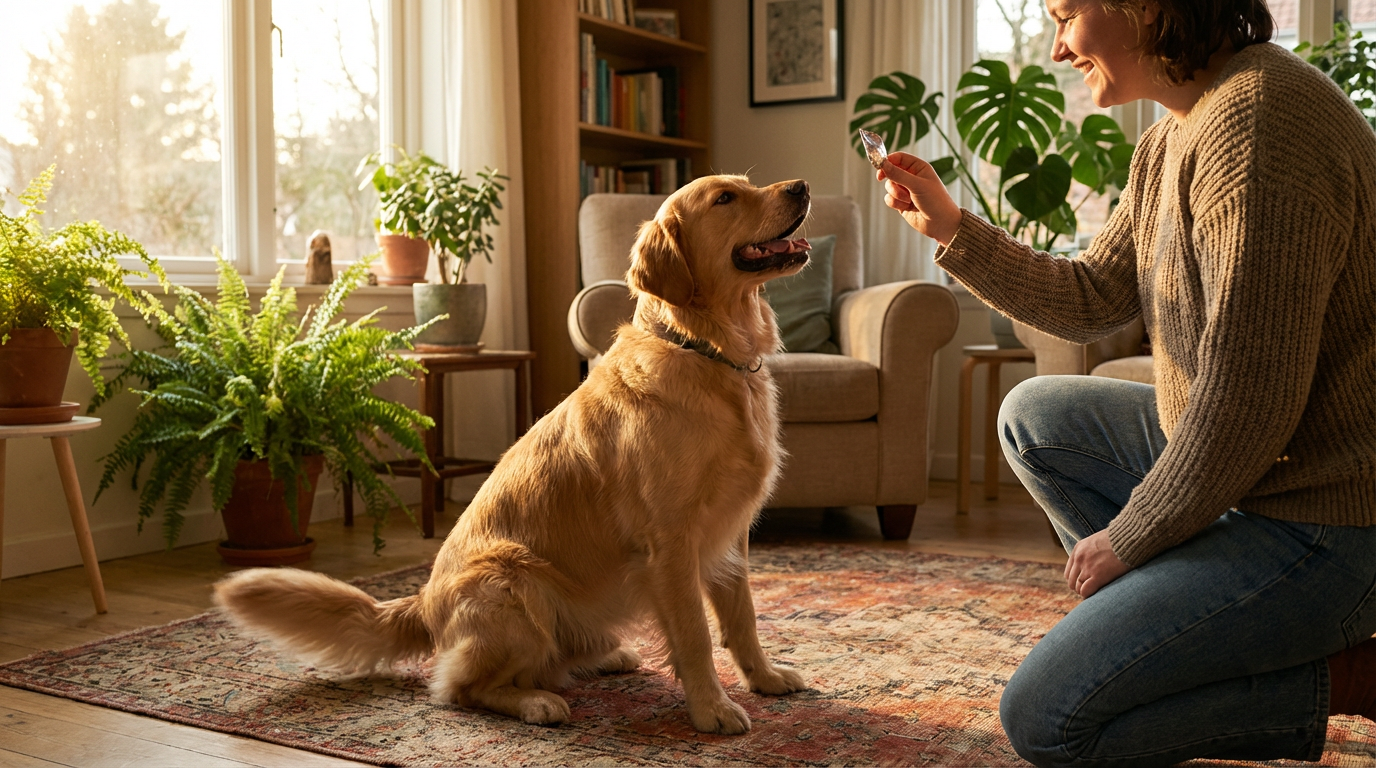
Dog Obedience Timeline:
If you’ve ever wondered:
“Why isn’t my dog listening?”
“How long is this supposed to take?”
“Maybe my dog just isn’t trainable…”
Pause right there.
Your dog can learn obedience.
In fact, most dogs are far more capable than their owners realize. The real issue usually isn’t intelligence; it’s expectation.
In this guide, we’ll explain how long obedience training really takes. We will describe what progress actually looks like. Additionally, we’ll discuss why most owners quit just before the breakthrough happens.
What Is Dog Obedience Training (Really)?
Dog obedience training is not about turning your dog into a robot.
It’s about building:
- Clear communication
- Consistent responses
- Impulse control
- Trust and leadership
Basic obedience usually includes:
- Sit
- Stay
- Come
- Leave It
- Heel
Advanced obedience adds:
- Distraction-proof recall
- Longer duration stays
- Off-leash control
- Polite greeting behavior
Here’s the truth: obedience is not a one-time event.
It’s a layered process.
Think of it like building muscle. You don’t go to the gym once and expect permanent results. You build strength through repetition and progression.
Dogs are no different.
How Long Does Dog Obedience Training Really Take?

Let’s break this down clearly.
Week 1: Foundation Phase
Your dog learns:
- Name recognition
- Basic focus
- Introduction to Sit
- Understanding rewards
Expect noticeable improvement in attention within 7 days if you train consistently.
Weeks 2–3: Response Building
Your dog starts:
- Sitting on command without a lure
- Understanding short “Stay”
- Beginning recall practice
This is when many owners quit.
Why?
Because progress slows slightly.
It’s no longer brand-new and exciting. You’re reinforcing patterns now. This is the “consistency zone.”
Weeks 4–6: Reliability Development
Now you’re:
- Increasing distractions
- Adding duration to commands
- Improving leash behavior
At this stage, most dogs show dramatic improvement, but only if the owner hasn’t stopped.
2–3 Months: Strong Basic Obedience
With steady daily training (5–15 minutes per day):
- Sit becomes automatic
- Recall becomes dependable
- Leash pulling reduces significantly
Full reliability takes longer, but by 90 days, most owners see a completely different dog.
Why Most Owners Quit Too Soon
Here’s the emotional truth:
People expect transformation before consistency.
They try for a week.
They don’t see perfection.
They assume failure.
But obedience training follows a curve:
- Fast early progress
- Temporary plateau
- Sudden breakthrough
Most people quit during the plateau.
That’s like digging for water, stopping at 8 feet, when the water is at 10 feet.
Your dog isn’t failing.
They’re learning.
And learning takes repetition.
Why It Matters Now
Untrained behavior compounds.
Pulling becomes stronger.
Jumping becomes habitual.
Ignoring commands becomes normal.
Every week without structure reinforces unwanted patterns.
But here’s the empowering part:
Obedience compounds too.
The earlier you commit, the easier it becomes.
Training now prevents frustration later.
It also strengthens your bond. Dogs feel more secure when they understand expectations.
Structure builds confidence for both of you.
5 Keys to Accelerate Obedience Training
If you want faster progress, focus on these essentials.
1. Train Daily (But Keep It Short)
5–15 focused minutes beats one long session per week.
Dogs learn best through repetition and clarity.
Consistency wins over intensity.
2. Use Clear Commands Once
Say “Sit” once.
Wait.
Reward compliance.
Repeating commands teaches dogs they can ignore the first few attempts.
Precision builds respect.
3. Reward What You Want to See Again
Dogs repeat rewarded behavior.
Reward:
- Eye contact
- Calm behavior
- Quick responses
Positive reinforcement accelerates learning dramatically.
4. Increase Distractions Gradually
Don’t expect perfect recall at the park if it’s not solid in your living room.
Train in layers:
- Quiet room
- Backyard
- Low-distraction outdoor area
- Busy environment
Progression prevents frustration.
5. Control Your Energy
Dogs read tone and body language instantly.
Calm confidence creates calm obedience.
Frustration creates confusion.
Lead clearly, not emotionally.
What Real Progress Looks Like
Progress isn’t perfection.
It looks like:
- Faster response times
- Fewer repeated commands
- Shorter distraction recovery
- More eye contact
Celebrate improvement, not flawless performance.
That mindset keeps you going long enough to reach mastery.
The Identity Shift That Changes Everything
Instead of asking:
“Is my dog obedient yet?”
Ask:
“Have I been consistent enough?”
Obedience isn’t about talent.
It’s about repetition and leadership.
Commit to 30, 60, or 90 days of structured training. You stop hoping for change. Instead, you start building it.
Imagine 90 Days from Now
Picture this:
You say “Sit,” and it happens instantly.
You call your dog, and they come running.
Walks feel calm instead of stressful.
Guests compliment your dog’s behavior.
You feel proud.
That outcome isn’t rare.
It’s earned.
And it starts with not quitting too soon.
Want a Step-by-Step System That Guarantees Progress?
If you want:
- A structured obedience roadmap
- Daily training breakdowns
- Troubleshooting for setbacks
- Proven techniques used by experienced trainers
Then don’t rely on guesswork.
👉 Start the complete dog obedience system here
Consistency creates results.
But structure creates consistency.
Make today the day you stop wondering how long it takes and start making it happen.
FAQ Section
Yes, Your Dog Can Learn Obedience — Here’s Exactly How Long It Really Takes (And Why Most Owners Quit Too Soon)
1. How long does it take for a dog to learn basic obedience?
Most dogs begin responding to basic commands within 1–2 weeks of consistent daily training. Reliable obedience typically develops over 4–8 weeks, depending on repetition and environment.
2. Why does progress feel fast at first and then slow down?
Early progress is exciting because your dog is learning something new. The slower phase is where repetition builds reliability. Many owners quit during this reinforcement stage just before long-term improvement happens.
3. Is my dog too old to learn obedience?
No. While puppies often learn faster, adult and even senior dogs can successfully learn obedience with consistent, positive reinforcement training.
4. How often should I train my dog?
Short daily sessions (5–15 minutes) are ideal. Consistency matters more than duration. Frequent, focused practice builds faster results than occasional long sessions.
5. What if my dog listens at home but not outside?
This is normal. Dogs don’t generalize commands automatically. You must gradually introduce distractions and practice in new environments to build reliable obedience everywhere.
6. How do I know if I’m expecting too much too soon?
If you’re seeking instant, distraction-proof obedience within a week, expectations are too high. Real progress looks like gradual improvement in focus, speed of response, and consistency over time.
Helpful Resources
If you’d like to go deeper into realistic obedience timelines and science-based training principles, these two trusted organizations offer valuable guidance:
For structured training advice and milestone-based learning expectations, explore the American Kennel Club (AKC) Dog Training Resources. Their expert articles explain how long different obedience skills typically take to develop and how to reinforce them properly.
You can also review behavior-based training guidance from the American Veterinary Society of Animal Behavior (AVSAB). They provide evidence-based recommendations on positive reinforcement and realistic behavior development timelines.
Stop the Biting Fast: The Calm Correction Method That Works in Days — Not Months
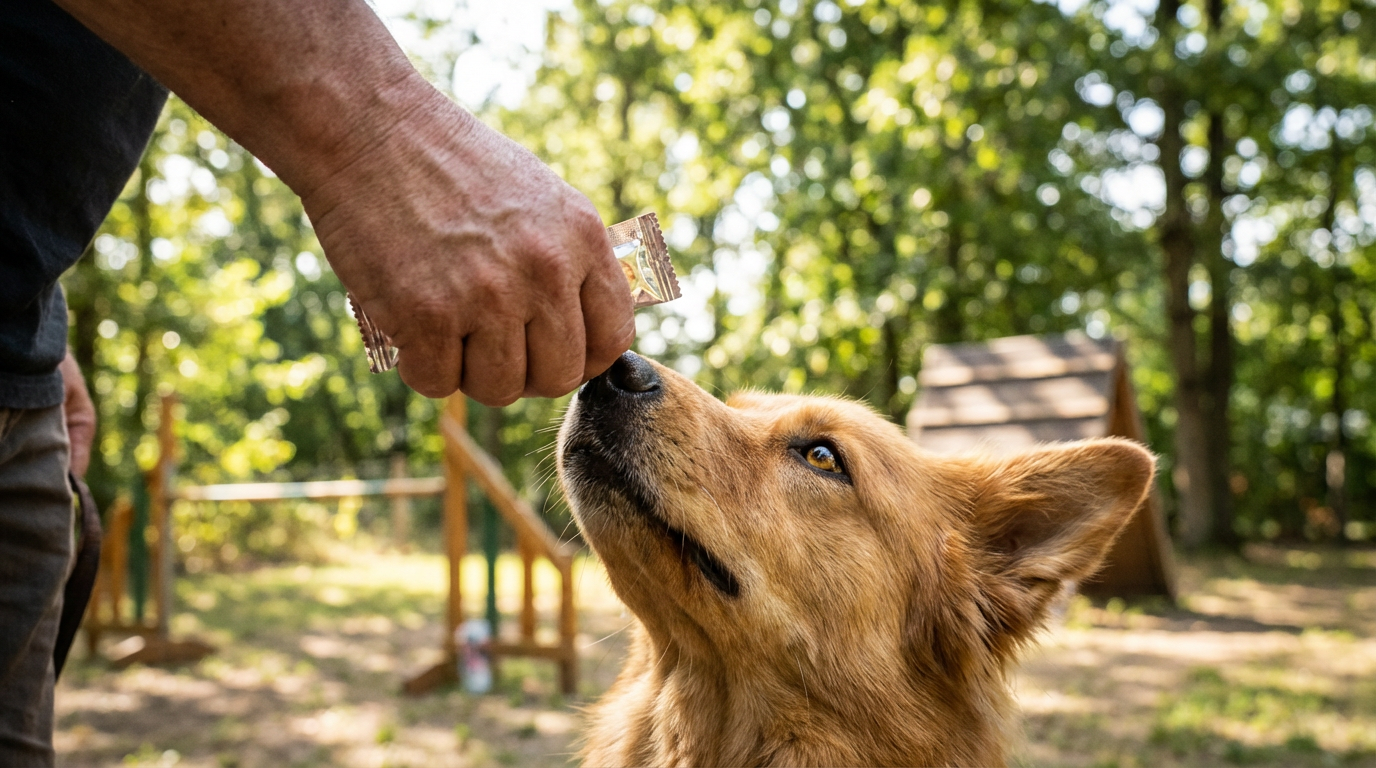
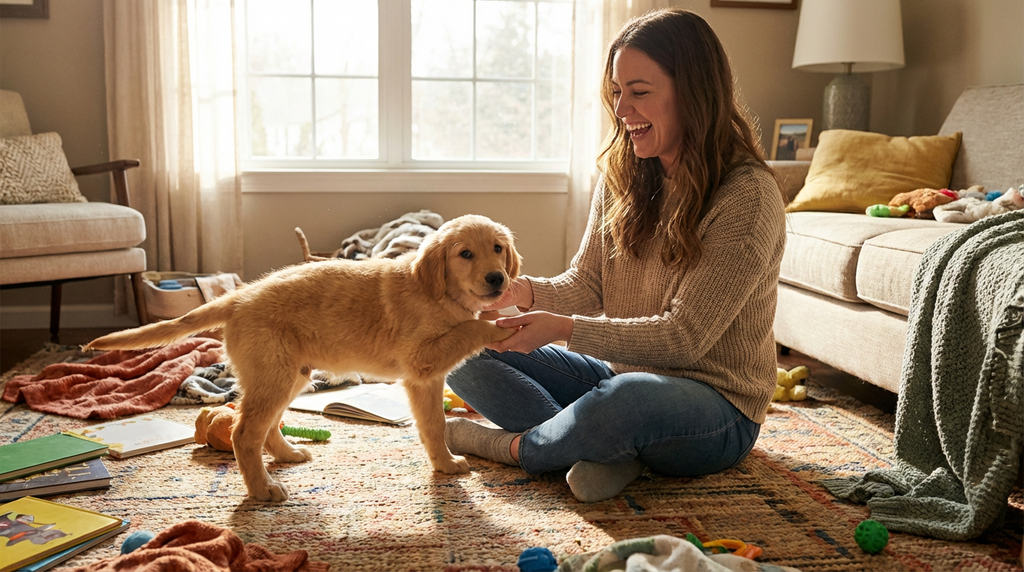
If your puppy is biting your hands, chewing your shoes, or turning playtime into a wrestling match, you’re not alone.
Puppy biting is one of the most frustrating challenges new dog owners face. It can feel embarrassing, overwhelming, and sometimes even discouraging. You wonder:
“Is my puppy aggressive?”
“Am I doing something wrong?”
“Will this ever stop?”
Take a breath.
The good news is this: most biting is completely normal and completely fixable.
In this guide, you’ll learn how to stop the biting fast. The method uses a calm correction technique. It works in days, not months. This approach does not involve yelling, hitting, or damaging your bond.
What Is the Calm Correction Method?
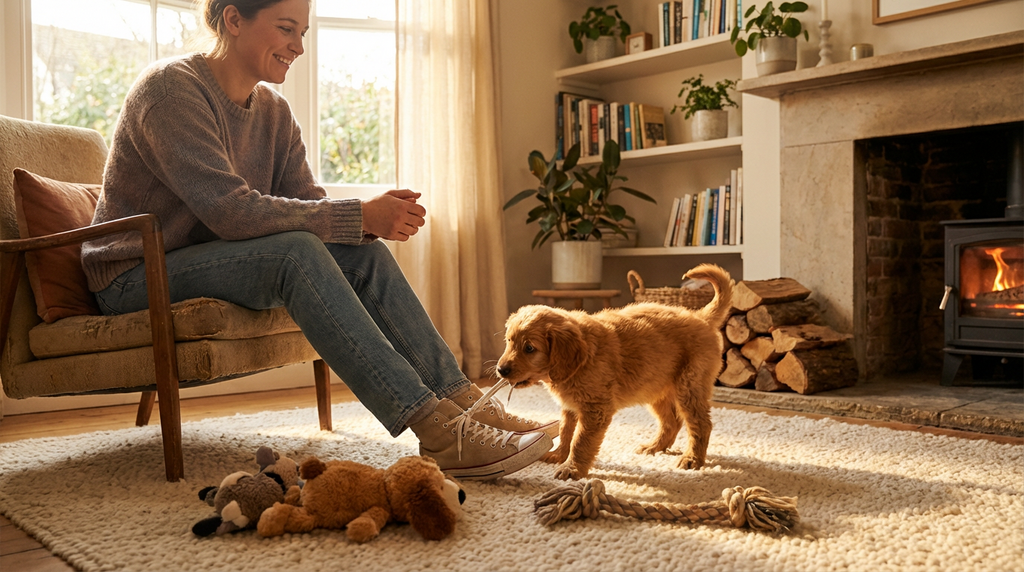
The Calm Correction Method is a structured, positive training approach that teaches your puppy:
- What behavior is unacceptable
- What behavior earns rewards
- How to control impulses
Instead of reacting emotionally when your puppy bites, you respond with calm consistency.
Why does this work?
Because puppies don’t learn from chaos. They learn from clarity.
When you yell, push them away, or engage in rough reactions, many puppies interpret it as play or attention. The behavior actually gets reinforced.
Calm correction removes the reward.
It replaces it with structure.
And structure builds obedience.
Why It Matters Now (Before It Becomes a Habit)
Here’s something many owners don’t realize:
Every time biting gets attention, it gets stronger.
Puppies repeat behaviors that:
- Get a reaction
- Relieve boredom
- Release energy
- Feel rewarding
If biting becomes their default way to interact, it doesn’t simply disappear with age.
It evolves.
Nipping turns into harder mouthing.
Play biting becomes jumping and grabbing.
Chewing becomes destruction.
The earlier you interrupt the pattern, the faster you reset it.
That’s why acting now matters.
You’re not just stopping bites; you’re shaping your dog’s future behavior.
Why Puppies Bite in the First Place
Before correcting behavior, it helps to understand it.
Common reasons include:
1. Teething Discomfort
Puppies explore and relieve gum pain with their mouths.
2. Play Behavior
Littermates bite each other constantly. It’s normal social development.
3. Attention-Seeking
If biting gets eye contact, movement, or sound, it’s rewarding.
4. Overstimulation
Tired puppies often bite more.
When you understand the trigger, you can respond strategically instead of emotionally.
The Calm Correction Method: Step-by-Step
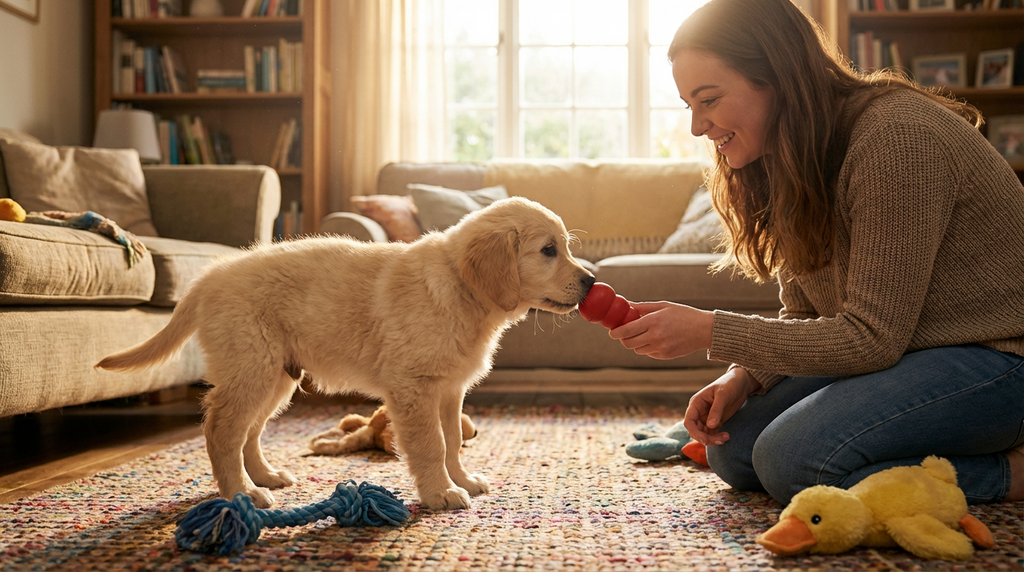
Let’s break this down into simple, actionable steps.
Step 1: Freeze and Remove Attention
When your puppy bites:
- Stop moving right away.
- Say a calm, firm “No” or “Too bad.”
- Stand up and turn away for 10–20 seconds.
No eye contact.
No talking.
No pushing.
You’re teaching: biting ends interaction.
This is powerful because attention is the reward they want most.
Step 2: Redirect Instantly
After the pause, offer an appropriate chew toy.
When they chew the toy instead, praise warmly.
This teaches:
“Biting hands = play stops.”
“Chewing toys = play continues.”
Dogs learn fastest when shown what to do, not just what to stop.
Step 3: Reward Calm Play
The moment your puppy licks instead of bites, sits instead of jumps, or engages, gently reward it.
Reinforce:
- Calm energy
- Soft mouths
- Controlled play
Positive reinforcement accelerates behavior change dramatically.
Step 4: Manage Energy Levels
Many biting episodes happen when puppies are:
- Overtired
- Overstimulated
- Under-exercised
Make sure your puppy gets:
- Short walks (age-appropriate)
- Mental stimulation
- Scheduled nap time
A tired puppy is a calmer puppy.
Step 5: Teach “Leave It”
Impulse control commands are game changers.
To teach “Leave It”:
- Hold a treat in your closed fist.
- Let your puppy sniff.
- When they stop trying to get it, say “Leave it” and reward with a different treat.
This builds self-control that carries over into reduced biting.
What NOT to Do
Avoid these common mistakes:
❌ Yelling
❌ Hitting or tapping the nose
❌ Holding their mouth shut
❌ Rough play that encourages biting
❌ Inconsistent correction
These either increase fear or accidentally reinforce the behavior.
Calm leadership builds trust. Fear builds confusion.
How Fast Will You See Results?
With consistent application, many owners see improvement in:
- 3–5 days for reduced intensity
- 7–10 days for noticeable control
- 2–3 weeks for strong habit change
The key word is consistent.
Every interaction teaches something.
When you stay calm and structured, progress compounds quickly.
Imagine the Difference
Picture this:
Your puppy approaches gently.
Guests come over without fear of nipping.
You play without scratches.
Your shoes stay intact.
You feel confident instead of stressed.
That shift isn’t luck.
It’s leadership.
And it starts with calm correction.
When to Seek Extra Help
If biting is:
- Accompanied by growling and stiffness
- Triggered by resource guarding
- Directed aggressively without play signals
Then consult a certified professional trainer or behaviorist.
Most puppy biting is normal. True aggression is rare, but it should be addressed properly.
The Fastest Way to Build Total Obedience
Stopping biting is just the beginning.
If you want:
- A thorough obedience roadmap
- Structured daily training guidance
- Proven techniques for barking, jumping, and leash pulling
- Step-by-step demonstrations
Then don’t stop here.
👉 Get the full puppy training system here:
The sooner you build structure, the easier everything becomes.
Your puppy isn’t “bad.”
They’re learning.
Make sure they’re learning the right lessons starting today.
FAQ Section
Stop the Biting Fast: The Calm Correction Method That Works in Days — Not Months
1. Is puppy biting normal, or is my dog aggressive?
Most puppy biting is completely normal and related to teething, play, or attention-seeking. True aggression is rare in young puppies. If biting includes stiff body language, growling over resources, or intense guarding, consult a professional trainer.
2. How quickly can the calm correction method reduce biting?
With consistent application, many owners see reduced intensity within 3–5 days. Noticeable control often develops within 1–2 weeks. Consistency is the key factor.
3. Should I yell or say “ouch” loudly when my puppy bites?
Yelling often excites puppies and can reinforce biting. A calm, firm correction followed by removal of attention is typically more effective and prevents overstimulation.
4. What if my puppy bites more when I ignore them?
If biting increases, it is an “extinction burst,” a temporary spike in behavior when a reward disappears. Stay consistent. The behavior usually decreases once your puppy realizes attention is no longer earned through biting.
5. Are chew toys enough to stop biting?
Chew toys are important, but redirection alone isn’t enough. You must also remove attention when biting occurs, so your puppy learns the clear difference between acceptable and unacceptable behavior.
6. When should I seek professional help for biting?
Seek professional guidance if your puppy:
- Bites hard enough to break skin regularly
- Shows guarding behavior over food or toys
- Displays aggressive posture or growling unrelated to play
Early professional intervention prevents long-term behavior problems.
Helpful Resources
If you’d like additional trusted guidance on stopping puppy biting and building healthy behavior habits, these two expert-backed resources are worth exploring:
For science-based training advice and behavior insights, visit the American Kennel Club (AKC) Guide to Stopping Puppy Biting. It provides practical tips on managing mouthing, teething, and early impulse control.
You can also review force-free training techniques. From the ASPCA Guide to Mouthing, Nipping, and Play Biting.
Which explains why puppies bite and how to redirect behavior safely and effectively.
Discover the Simple 7-Day Puppy Training Plan That Makes Starting Easy (Even If You’ve Never Trained a Dog Before)
Bringing home a puppy is exciting, heart-melting, and if we’re honest a little overwhelming.
One minute you’re imagining cuddles on the couch. The next, you’re Googling “why is my puppy biting everything?” at midnight.
If you’ve never trained a dog before, it can feel like there’s too much advice and no clear starting point. That’s exactly why this simple 7-day puppy training plan exists. To remove the confusion and give you a confident, structured beginning.
Let’s break it down.
What Is the 7-Day Puppy Training Plan?
The 7-day puppy training plan is a beginner-friendly roadway designed to help you:
- Create basic obedience
- Build trust and communication
- Prevent common behavior problems
- Create a daily routine your puppy understands
It’s not about perfection in a week.
It’s about building momentum.
Instead of trying to teach everything at once, you focus on one key foundation per day. By the end of the week, you’ll have:
- A puppy that responds to their name
- Early impulse control
- A clear house-training rhythm
- Stronger bonding and trust
And most importantly, you’ll feel in control.
Why It Matters Now (Not “Someday”)
Here’s something many new dog owners don’t realize:
Puppies are always learning, even when you’re not intentionally training them.
Every jump that gets attention.
Every bite that gets a laugh.
Every ignored command.
Those moments shape future behavior.
The first few weeks set the tone for:
- Obedience
- Confidence
- Calmness
- Respect
If you delay structure, your puppy builds habits you’ll later have to undo.
But when you start early with a simple plan, you prevent 80% of common behavior issues before they grow.
That’s powerful.
The Simple 7-Day Puppy Training Plan
Each day builds on the last. Keep sessions short (5–10 minutes), positive, and consistent.
Day 1: Name Recognition & Focus
Goal: Your puppy turns to you when you say their name.
How:
- Say your puppy’s name once.
- When they look at you, reward immediately.
- Repeat 10–15 times in short bursts.
Why it matters:
Attention is the foundation of all obedience. If your puppy doesn’t look at you, they can’t follow commands.
Tip: Never use their name in a negative tone. Keep it positive.
Day 2: Sit Command
Goal: Teach “Sit” as your first obedience anchor.
How:
- Hold a treat above their nose.
- Slowly move it backward over their head.
- As their bottom touches the floor, say “Sit” and reward.
Why it matters:
Sit becomes your control switch before meals, before walks, before greeting guests.
You’re teaching impulse control early.
Day 3: Crate Introduction
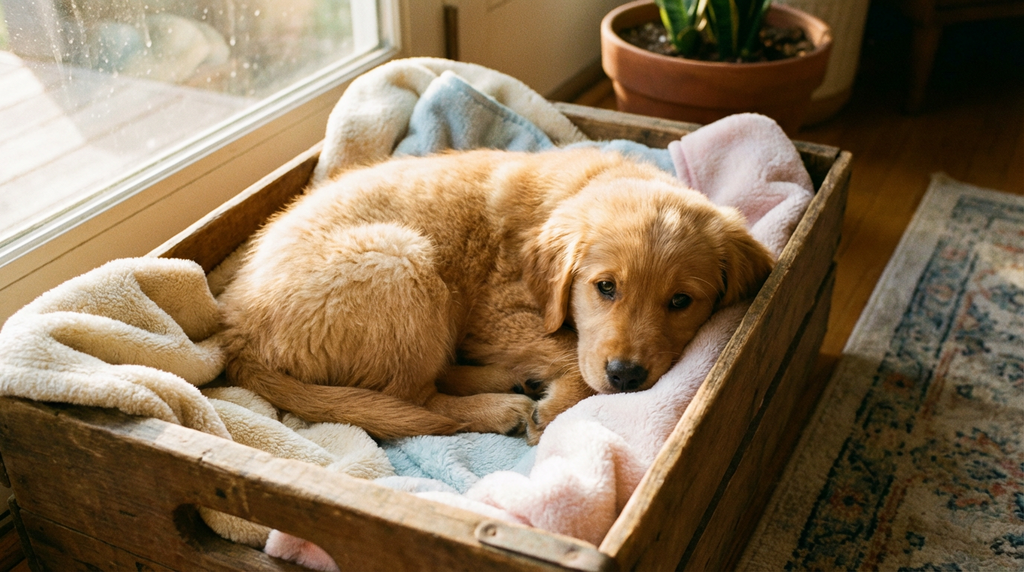
Goal: Make the crate a safe, calm space.
How:
- Toss treats into the crate.
- Allow your puppy to enter freely.
- Praise calmly.
- Start with short 5-minute intervals.
Why it matters:
Crate training helps with:
- Housebreaking
- Preventing destructive behavior
- Building independence
Day 4: House Training Rhythm
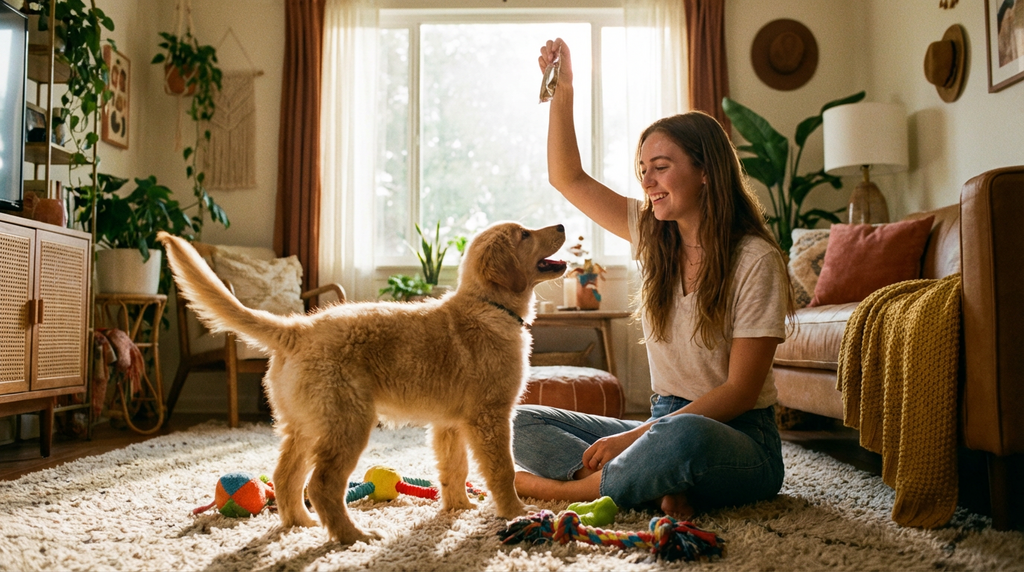
Goal: Set up bathroom consistency.
How:
- Take your puppy out every 2–3 hours.
- Right after waking.
- After meals.
- After play sessions.
Reward right away after they go outside.
Why it matters:
Consistency builds clarity. Puppies thrive on predictable routines.
Most accidents happen because humans miss timing, not because puppies are stubborn.
Day 5: “Leave It”
Goal: Prevent chewing and unsafe grabbing.
How:
- Hold a treat in your closed hand.
- Let your puppy sniff.
- When they stop trying to get it, say “Leave it” and reward with a different treat.
Why it matters:
This command protects:
- Shoes
- Furniture
- Dangerous objects
It’s a confidence-builder for you and a safety net for your puppy.
Day 6: Leash Introduction
Goal: Calm leash exposure without pulling.
How:
- Let your puppy wear the leash indoors first.
- Reward calm walking beside you.
- Stop moving when they pull.
Why it matters:
Early leash training prevents years of frustration.
You’re teaching that pulling doesn’t get results, but calm walking does.
Day 7: Recall (“Come”)
Goal: Build reliable response when called.
How:
- Get low and open your arms.
- Say “Come!” in a happy tone.
- Reward heavily when they reach you.
Why it matters:
Recall can protect your puppy’s life in emergencies.
Make it the happiest command they know.
Common Beginner Mistakes to Avoid
Even with a plan, beginners often:
- Train too long (keep sessions short)
- Repeat commands endlessly
- Inconsistently reward
- Show frustration
Remember: puppies learn best through calm repetition and positive reinforcement.
Progress beats perfection.
How You’ll Feel in 7 Days
Imagine this:
Your puppy looks at you when you call their name.
They sit before meals.
They enter the crate without fear.
Accidents decrease.
You’re not stressed. You’re structured.
That shift from chaos to clarity is what builds long-term obedience.
And it starts now.
Want the Full Step-by-Step System?
This 7-day plan is your foundation.
But if you want:
- A full obedience roadway
- Detailed video demonstrations
- Troubleshooting for biting, barking, and jumping
- A structured long-term training framework
Then it’s time to go deeper.
👉 Click here to access the full puppy training system now:
Don’t wait until small issues become big problems.
Start shaping the dog you’ll be proud of today.
Your puppy is learning anyway.
Make sure they’re learning the right things.
FAQ Section
1. How long does it really take to see results with the 7-day puppy training plan?
Most beginners notice improvements in focus, responsiveness, and routine within the first week. Yet, consistency beyond the first 7 days is what solidifies long-term obedience.
2. Is the 7-day puppy training plan suitable for older puppies?
Yes. While early training is ideal, this plan works well for puppies up to 6–8 months old. You may simply need slightly more repetition if habits are already forming.
3. What if my puppy doesn’t respond right away?
That’s normal. Puppies have short attention spans. Keep sessions under 10 minutes, use high-value rewards, and stay patient. Progress builds through repetition and positive reinforcement.
4. Do I need special equipment for this training plan?
No special tools are required. You’ll only need:
- Small training treats
- A leash
- A crate
- A quiet training space
Simplicity increases consistency.
5. Can I train my puppy without hiring a professional trainer?
Absolutely. Many first-time dog owners successfully train their puppies at home using structured systems. Professional trainers are helpful for severe behavioral issues, but most foundational obedience can be built independently.
6. What happens after the first 7 days?
The first week builds attention, structure, and early obedience. After that, you should continue reinforcing commands. Increase distractions gradually. Expand into advanced behaviors like longer “stay.” Practice loose-leash walking outdoors and improve recall.
Helpful External Resources
If you’d like to explore trusted, science-backed guidance alongside this 7-day puppy training plan. Here are two highly respected resources. For expert-backed puppy care and training fundamentals, visit the American Kennel Club (AKC) Training Resources.
They offer structured guidance on obedience, crate training, socialization, and developmental stages. You can also explore positive reinforcement techniques and behavior advice from the
Humane Society Dog Training Guide. Their step-by-step tips are especially helpful for first-time puppy owners who want humane, effective training strategies.
The Collie Dog: A Complete Guide to Temperament, Care, and Choosing the Right Companion
You’ve seen the image before.
A graceful dog with a flowing coat, intelligent eyes, and an unmistakable presence, alert, loyal, almost watchful.
Maybe you’re considering bringing one home.
Maybe you grew up watching Lassie and are wondering if the real-life version matches the legend.
Or maybe you’re trying to decide if the Collie dog is the right fit for your family, space, and lifestyle.
Beneath the beauty and reputation lies a practical question:
Is the Collie truly the right dog for me?
This guide will answer that clearly, not romantically, not critically, but realistically.
Understanding the Avatar: Who Is Researching The Collie Dog?
If you’re searching for “the Collie dog,” your intent is informational with light commercial interest.
You are:
- A prospective dog owner comparing breeds
- A family evaluating temperament and safety
- An active individual looking for an intelligent companion
- Someone seeking a loyal, trainable, emotionally attuned dog
Your Emotional State:
- Curious but cautious
- Inspired by the breed’s reputation
- Concerned about grooming or health issues
- Wanting to avoid choosing the wrong dog
Your deeper drivers?
- Security (a safe, gentle family companion)
- Status (a beautiful, respected breed)
- Freedom (a dog that fits your lifestyle)
- Long-term stability (10–14 years is a serious commitment)
Let’s examine the breed with clarity.
What Is The Collie Dog?
The Collie is a herding breed originally developed in Scotland and Northern England.
There are two primary types:
1. Rough Collie
- Long, flowing coat
- Most recognized due to media exposure
2. Smooth Collie
- Short, dense coat
- Same temperament, less grooming
Both share similar physical and behavioral traits.
They are medium-to-large dogs, typically:
- 50–75 pounds
- 22–26 inches tall
- Life expectancy: 12–14 years
Recognized by major kennel clubs, the Collie is categorized as a working/herding dog.
Collie Dog Temperament: What You Can Expect
One of the strongest reasons people consider the Collie dog is temperament.
Core Personality Traits:
- Highly intelligent
- Loyal and people-focused
- Gentle with children
- Alert but not aggressive
- Sensitive to tone and environment
Collies consistently rank high in obedience and trainability assessments. Their herding background required:
- Responsiveness
- Quick decision-making
- Strong human partnership
What This Means for You
They are emotionally perceptive.
They thrive on:
- Inclusion in family routines
- Verbal communication
- Positive reinforcement training
They do not thrive in isolation.
A Collie left alone for long periods develop:
- Anxiety
- Excessive barking
- Destructive behaviors
This is not a “low-engagement” breed.
Are Collies Good Family Dogs?
In many cases, yes.
Collies are known for:
- Patience with children
- Protective but gentle instincts
- High adaptability
However, supervision is always required with young children and any dog.
Their herding instinct show up as:
- Light nipping
- Circling behavior
Proper training mitigates this easily.
Grooming and Maintenance: The Reality
The image of the Rough Collie is stunning.
But that coat requires commitment.
Rough Collie Grooming Needs:
- Brushing 2–3 times weekly
- Seasonal shedding (“blowing coat”)
- Regular bathing
- Feathering maintenance
Smooth Collie Grooming Needs:
- Weekly brushing
- Less matting risk
- Easier maintenance
Hidden risk:
Underestimating grooming time leads to:
- Skin issues
- Matting
- Increased shedding inside the home
If low maintenance is a priority, consider the Smooth Collie.
Exercise Requirements: How Active Is The Collie Dog?
The Collie is energetic but not hyperactive.
Daily needs:
- 60–90 minutes of activity
- Walks + mental stimulation
- Training sessions
- Interactive play
Mental stimulation is crucial.
Because they are intelligent, boredom leads to:
- Barking
- Digging
- Pacing
Activities they excel in:
- Agility
- Obedience trials
- Herding events
- Advanced trick training
This is a thinking dog.
Health Considerations and Genetic Risks
No breed is without health concerns.
Common Collie health issues include:
- Collie Eye Anomaly (CEA)
- Progressive Retinal Atrophy (PRA)
- Hip dysplasia
- MDR1 gene mutation (drug sensitivity)
Responsible breeders screen for:
- Genetic conditions
- Eye certifications
- Hip evaluations
The cost of inaction?
Purchasing from unverified sources can result in:
- High veterinary expenses
- Emotional distress
- Reduced lifespan
Always request health testing documentation.
The Cost of Owning The Collie Dog
Ownership includes:
Initial Costs:
- Purchase or adoption fees
- Vaccinations
- Spay/neuter
- Crate, bed, grooming tools
Ongoing Costs:
- Food
- Grooming supplies
- Routine vet care
- Training classes
Estimated annual care ranges widely depending on region and health.
Collies are not the most expensive breed — but they are not low-cost either.
Is The Collie Dog Right for Your Lifestyle?
Use this simple Fit Framework:
Choose a Collie If:
- You want a loyal, emotionally intelligent companion
- You can provide daily engagement
- You value trainability
- You have time for grooming
Reconsider If:
- You prefer independent dogs
- You’re away from home most of the day
- You dislike shedding
- You want a guard dog with high territorial aggression
Collies are protectors but not aggressive defenders.
Socialization and Training Strategy
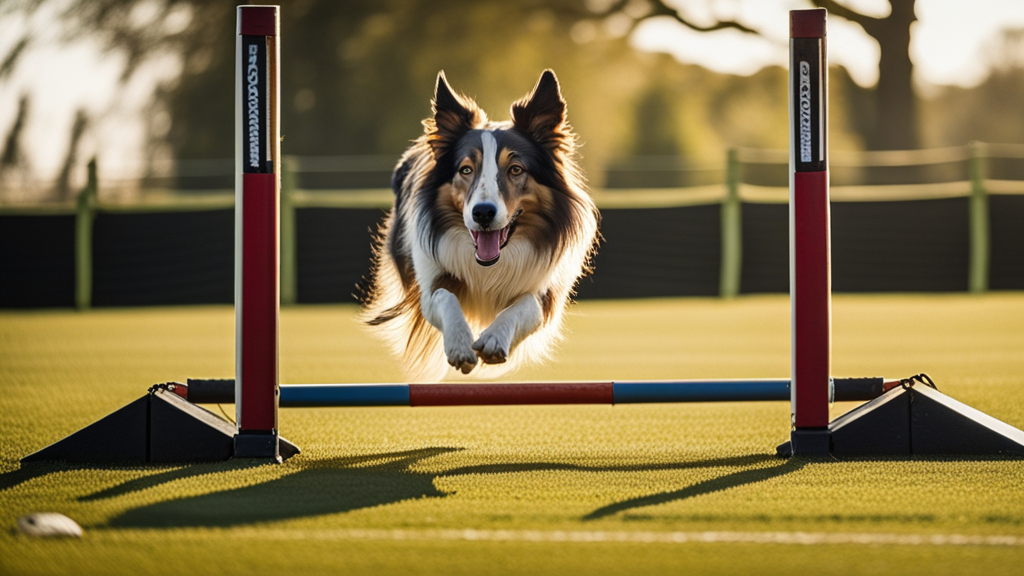
Early socialization shapes temperament.
Expose your Collie puppy to:
- People
- Sounds
- Environments
- Other dogs
Positive reinforcement works best.
Collies are sensitive.
Harsh correction damages trust quickly.
They respond to:
- Praise
- Structured consistency
- Clear communication
Their intelligence allows them to learn complex commands quickly.
Rough Collie vs. Smooth Collie: Which Should You Choose?
Temperament: Similar
Energy: Similar
Trainability: Similar
Main difference:
Grooming commitment.
If appearance is your priority, Rough Collie appeal more.
If practicality matters most, Smooth Collie offers easier maintenance.
Addressing Common Objections
“Isn’t the Collie dog too high maintenance?”
Only if your expectations are misaligned.
They require time, not chaos.
“Are they good for apartments?”
if:
- Daily exercise is consistent
- Barking is managed
- Space is sufficient
They are adaptable but not sedentary.
“Do they bark a lot?”
They are alert and vocal when stimulated.
Training reduces excessive barking significantly.
The Emotional Value of The Collie Dog
Beyond logistics, Collies offer:
- Emotional atonement
- Family bonding
- Predictable temperament
- Loyal companionship
Their gaze is attentive.
Their behavior is cooperative.
For many owners, this breed represents:
Stability.
Partnership.
Trust.
Those are not small qualities.
Make the Decision Deliberately
Choosing the Collie dog is not about nostalgia.
It’s about alignment.
If your lifestyle supports:
- Engagement
- Grooming
- Structured activity
The Collie can be an extraordinary companion.
If not, another breed can serve you better.
The goal is not to choose a beautiful dog.
The goal is to choose the right dog.
If you’re serious about moving forward, your next step should be:
- Research reputable breeders or rescue organizations
- Visit in person
- Ask detailed health and temperament questions
A Collie can be with you for over a decade.
Choose thoughtfully.
Frequently Asked Questions (FAQ)
1. What is the temperament of the Collie dog?
The Collie dog is known for being intelligent, loyal, and highly people-oriented. They are typically gentle with children, responsive to training, and emotionally perceptive. Collies thrive in engaged households where they are included in daily activities.
2. Are Collies good family dogs?
Yes, Collies are widely considered excellent family dogs due to their patience, protective instincts, and trainability. However, like all breeds, they require proper socialization and supervision around young children.
3. What is the difference between a Rough Collie and a Smooth Collie?
The primary difference is coat length. Rough Collies have long, flowing coats. These coats require frequent grooming. In contrast, Smooth Collies have short, dense coats. These are easier to maintain. Temperament and energy levels are generally similar between both types.
4. How much exercise does the Collie dog need?
Collies typically require 60–90 minutes of daily physical and mental stimulation. This can include walks, playtime, obedience training, agility activities, and interactive games to prevent boredom.
5. Do Collies shed a lot?
Yes, especially Rough Collies. They have a double coat and experience seasonal shedding. Regular brushing (2–3 times per week) helps manage loose hair and prevents matting. Smooth Collies shed as well but require less intensive grooming.
6. Are Collies easy to train?
Yes. Collies are highly intelligent and responsive to positive reinforcement methods. They excel in obedience training, agility, and advanced commands. Harsh training methods are not recommended due to their sensitive nature.
7. What health problems are common in the Collie dog?
Common health concerns include Collie Eye Anomaly (CEA) and hip dysplasia. Progressive Retinal Atrophy (PRA) is also a concern. Another issue is MDR1 gene sensitivity, which affects medication reactions. Responsible breeders test for these conditions.
8. Can Collies live in apartments?
Collies can adapt to apartment living if they receive adequate daily exercise and mental stimulation. However, they are not sedentary dogs and become vocal or restless if under-stimulated.
9. How long does the Collie dog live?
The average lifespan of a Collie is approximately 12–14 years, depending on genetics, health care, and overall lifestyle.
10. Is the Collie dog a good choice for first-time owners?
Collies can be an excellent choice for first-time owners. They are ideal for those willing to invest time in training. Grooming and daily engagement are also necessary. Their intelligence and cooperative temperament often make them easier to manage than more independent breeds.
Recommended Resources
For authoritative breed standards and official information, visit the American Kennel Club (AKC) Collie Breed Page. It outlines temperament, health testing recommendations, and breed history.
You can also explore the Collie Club of America for in-depth guidance. They provide information on responsible breeders, rescue organizations, and long-term care best practices specific to the Collie breed.
How to Prevent Separation Anxiety in Puppies (Before It Becomes a Lifelong Problem)
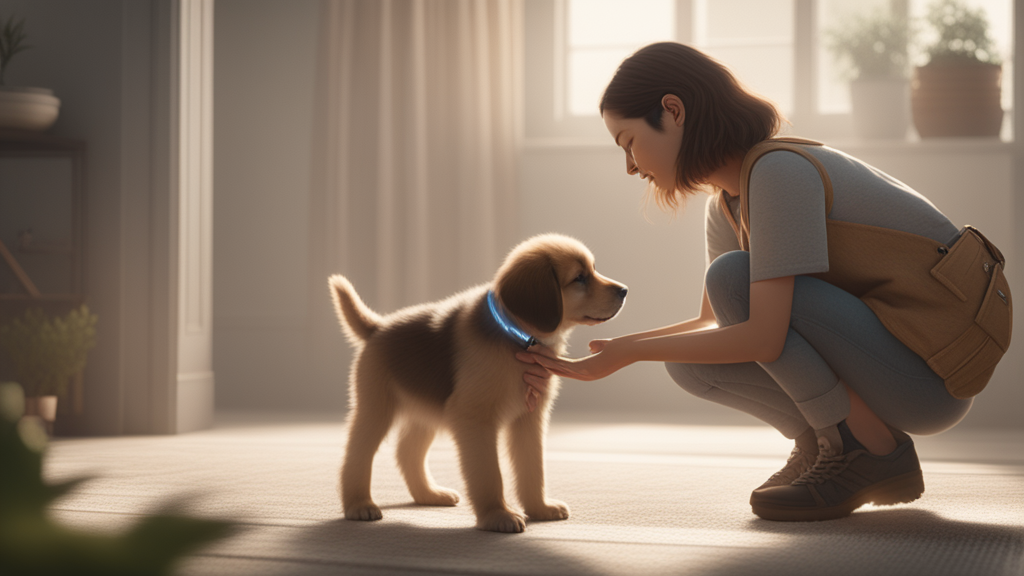
If you’re searching for how to prevent separation anxiety in puppies, you’re probably feeling one of two things:
- You’re about to leave your puppy alone for the first time — and you’re worried.
- Or you’ve already heard crying, scratching, or panicked behavior… and you don’t want it to escalate.
You don’t want a dog who:
- Panics every time you grab your keys
- Destroys furniture while you’re gone
- Howls nonstop when left alone
And most of all, you don’t want your puppy to feel afraid.
Here’s the good news:
True separation anxiety is preventable in most puppies when you build independence intentionally from day one.
This guide will show you exactly how to do that — step-by-step — using behavioral science and positive reinforcement principles.
First: What Separation Anxiety Really Is

Separation anxiety is not mild whining.
It’s a panic disorder triggered by the absence of an attachment figure.
Clinical signs include:
- Destructive behavior near doors or windows
- Escaping attempts
- Excessive drooling
- Self-injury
- Continuous distress vocalization
- House-soiling despite being trained
It’s rooted in panic, not stubbornness.
Prevention is far easier than rehabilitation.
Why Puppies Develop Separation Anxiety
Most cases come from one of these patterns:
- Constant access to people with no independence training
- Sudden long absences without gradual exposure
- Emotional departures and arrivals
- Only being crated when owners leave
- Genetic predisposition combined with inconsistent structure
Puppies are biologically wired to stay close.
Your job isn’t to eliminate attachment, it’s to teach emotional safety when alone.
The Independence-Building Framework
Preventing separation anxiety comes down to four pillars:
- Gradual Alone Training
- Emotional Neutrality Around Departures
- Confidence Through Structure
- Balanced Attachment
Let’s break it down step-by-step.
Step 1: Start Alone-Time Training Immediately
Do not wait until you “have to” leave for hours.
Start with micro-absences.
Day 1–3:
- Step behind a door for 5 seconds.
- Return calmly.
- Repeat multiple times daily.
Gradually increase:
- 10 seconds
- 30 seconds
- 1 minute
- 3 minutes
The goal is boring normalcy — not drama.
Your puppy learns:
People leave → People return → I am safe.
Step 2: Normalize Short Daily Separation (Even When You’re Home)
Many well-meaning owners create dependency by allowing constant contact.
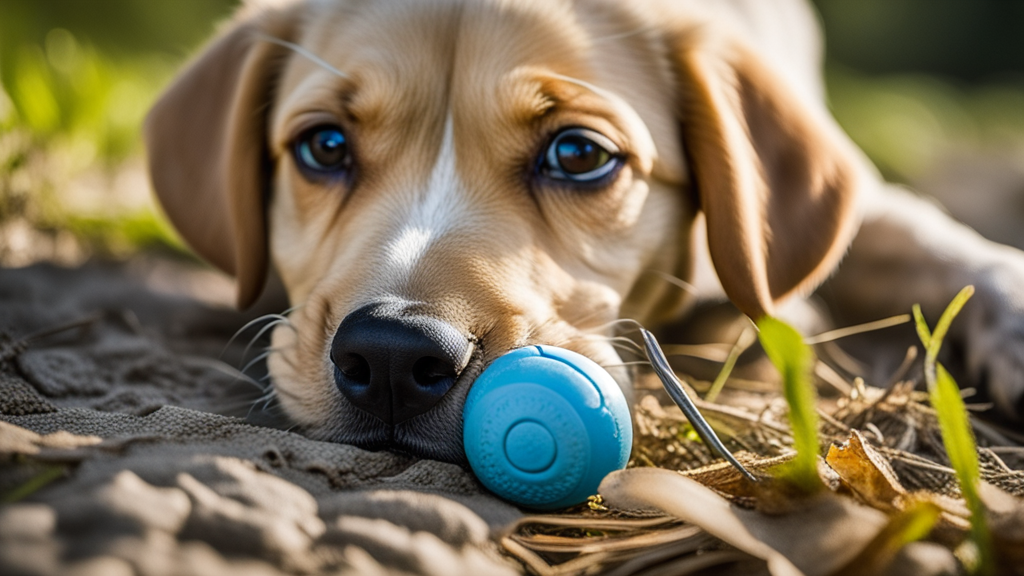
Instead:
- Use baby gates.
- Encourage naps in another room.
- Practice short crate sessions while you move around the house.
Attachment is healthy.
Dependence is risky.
You want your puppy to feel secure, not reliant.
Step 3: Make Departures Emotionally Neutral
One of the biggest mistakes:
“Bye baby! I’ll miss you so much!”
That signals:
This is a big event.
Instead:
- Leave calmly.
- No long goodbyes.
- No emotional build-up.
Same for returning home:
- Wait until calm before greeting.
- Reward relaxed behavior.
This prevents emotional spikes tied to your presence.
Step 4: Desensitize Departure Triggers
Puppies learn patterns quickly.
Keys → Panic
Shoes → Panic
Coat → Panic
Break the association.
Practice:
- Picking up keys and sitting down.
- Putting on shoes and not leaving.
- Opening and closing the door randomly.
This removes predictive fear patterns.
Step 5: Avoid Only Using the Crate When Leaving
If the crate only happens during absences, it becomes a predictor of isolation.
Instead:
- Crate while you’re home.
- Give special chews inside.
- Keep sessions short and calm.
The crate should signal:
Rest, safety, relaxation.
Not abandonment.
Step 6: Build Confidence Through Structured Routines
Predictability reduces anxiety.
Create consistent:
- Feeding times
- Walk times
- Potty breaks
- Sleep schedules
Structure builds psychological safety.
When life feels predictable, short absences feel less threatening.
Step 7: Teach Independent Play
Encourage your puppy to:
- Chew independently
- Explore toys alone
- Settle on a mat without constant engagement
Avoid becoming the sole source of stimulation.
A confident puppy can self-soothe.
Step 8: Exercise Before Absences
A mentally and physically satisfied puppy rests more easily.
Before leaving:
- Short walk
- Light play session
- Potty break
Then crate or confine calmly.
Energy management reduces stress behaviors.
Step 9: Recognize Early Warning Signs
Early signals of developing separation anxiety:
- Following you room-to-room obsessively
- Distress when doors close between you
- Escalating panic within seconds of leaving
- Refusal to eat when alone
If you notice these:
- Shorten absences
- Increase gradual exposure
- Consult a certified positive reinforcement trainer if needed
Early intervention prevents severe anxiety later.
What NOT To Do
Avoid:
- Punishing destructive behavior
- Using shock collars or aversive tools
- “Flooding” (leaving puppy alone for hours to “get used to it”)
- Ignoring true panic distress
Anxiety is not defiance.
It’s fear.
Fear requires reassurance through structure — not force.
The Long-Term Impact of Prevention
Preventing separation anxiety gives you:
- Freedom to travel
- Calm neighbors
- Lower stress
- Fewer behavior problems
- A dog who feels emotionally secure
And more importantly — your puppy grows into a dog who trusts that absence is temporary.
That emotional resilience lasts a lifetime.
How Long Does Prevention Take?
Independence training typically develops over:
- 3–6 weeks in young puppies
- Longer for rescue dogs
Consistency matters more than speed.
Slow exposure builds strong emotional foundations.
When to Seek Professional Help
If your puppy shows:
- Self-harm behaviors
- Severe destruction
- Ongoing panic despite gradual training
Consult:
- Certified Professional Dog Trainer (CPDT-KA)
- Veterinary behaviorist
- Your veterinarian
Severe separation anxiety sometimes requires structured behavior modification plans.
There is no shame in getting support.
The Bigger Picture: Security Creates Freedom
At its core, preventing separation anxiety isn’t about silence.
It’s about teaching your puppy:
“I can be alone. I am safe. My human always comes back.”
That belief creates:
- Emotional stability
- Behavioral reliability
- Long-term confidence
And for you?
Peace of mind.
Final Thought
Start small.
Keep it calm.
Build independence gradually.
If you’ve already begun crate training, combine these steps with proper crate conditioning for best results.
Your puppy doesn’t need constant closeness.
They need predictable security.
And that starts today.
FAQ Section: How to Prevent Separation Anxiety in Puppies
1. At what age should I start preventing separation anxiety?
You should start independence training as early as 8 weeks old. Early exposure to short, calm absences significantly reduces the likelihood of separation anxiety developing later.
2. Is some crying normal when leaving a puppy alone?
Yes, mild protest whining is common. However, continuous, escalating distress signals early anxiety. Gradual exposure helps build tolerance safely.
3. How long can a puppy be left alone?
Young puppies should only be left alone for short periods based on age. Use 1 hour per month of age as a rough guideline. Build duration gradually.
4. Does crate training prevent separation anxiety?
Proper crate training can help prevent separation anxiety when paired with gradual alone-time conditioning. However, the crate alone is not a cure; it must be part of a structured independence plan.
5. What are early warning signs of separation anxiety?
Early signs include excessive clinginess, distress when doors close, refusal to eat alone, and panic behaviors within minutes of departure.
6. Can separation anxiety be cured if it develops?
Mild cases can improve with structured desensitization training. Severe cases require professional guidance from a certified trainer or veterinary behaviorist.
Reading Resource
To better understand prevention and early intervention strategies for separation anxiety, consult the ASPCA’s behavioral guidance. You can find this information at the ASPCA Separation Anxiety Resource.
Also, review the American College of Veterinary Behaviorists’ ACVB Separation Anxiety Position Statement. Both offer clinically informed advice to support long-term emotional stability in dogs.
How to Crate Train a Puppy Step-by-Step (Without Stress or Setbacks)
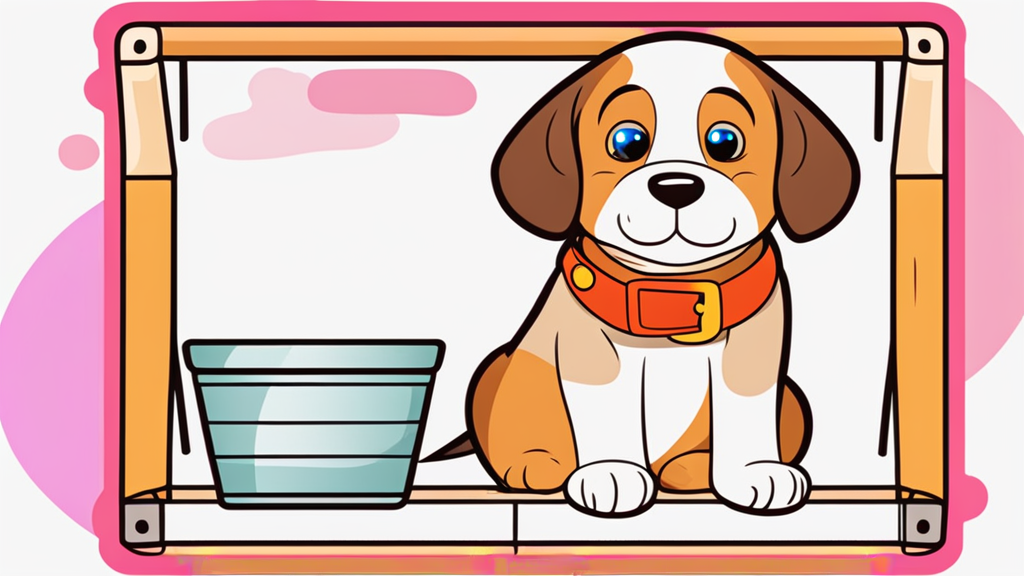
Learn how to train a puppy step-by-step in 10 steps.
If you’re here, you probably want two things:
- A house-trained puppy
- A calm, confident dog who feels safe when you’re not home
But maybe right now your reality looks different.
Your puppy cries when the crate door closes.
Or refuses to go inside.
Or has accidents despite “doing everything right.”
Take a breath.
Crate training isn’t about control. Creating emotional safety and structure helps in faster house training. It reduces destructive behaviors. It results in a more secure puppy.
This step-by-step guide walks you through the exact process. It is rooted in behavioral science and positive reinforcement. This helps you avoid the most common crate training mistakes from the start.
Step 1: Choose the Right Crate and Setup
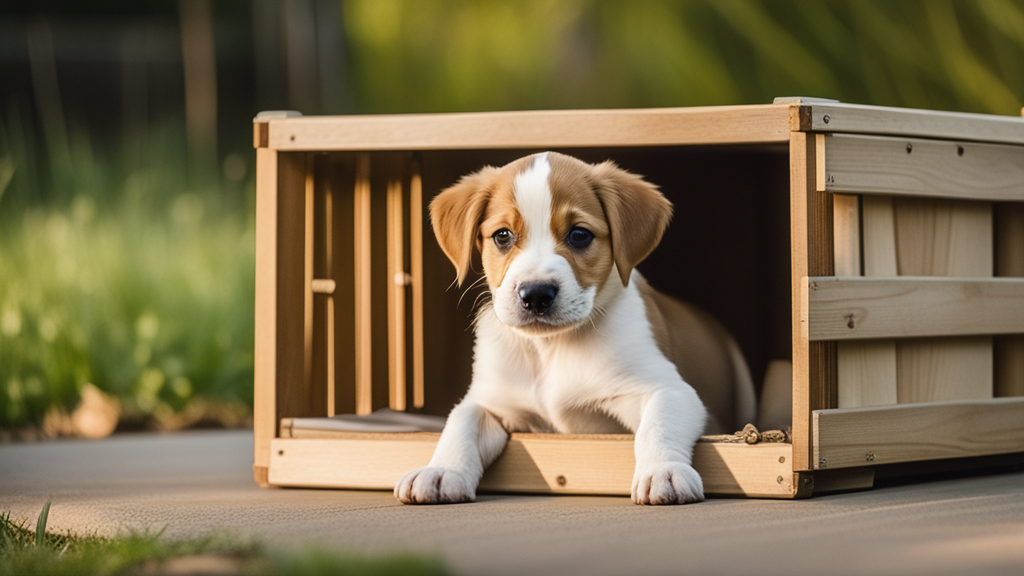
Before training begins, the environment must be correct.
✔ Pick the Right Size
Your puppy should be able to:
- Stand up fully
- Turn around comfortably
- Lie down stretched out
Too large? They potty in one corner.
Too small? It feels restrictive and stressful.
For growing puppies, use a crate with a divider panel.
✔ Place It Strategically
Put the crate:
- In a quiet but not isolated area
- Away from drafts
- Near family activity (especially early on)
Puppies crave proximity. Social security lowers anxiety.
Step 2: Introduce the Crate as a Positive Space
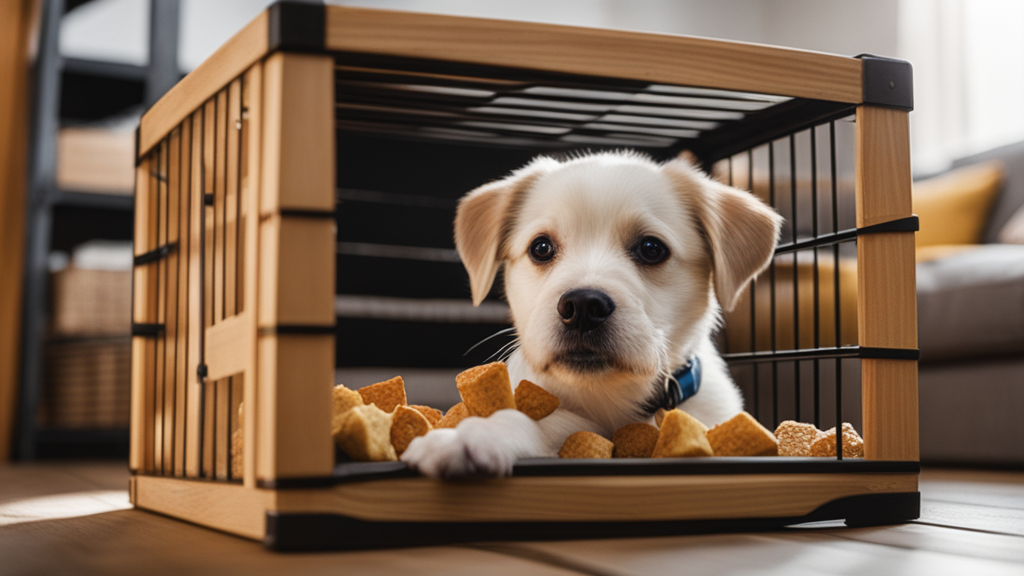
This is where most owners rush and where resistance begins.
Goal: Crate = Safe + Rewarding
Day 1–2: Door Open, Zero Pressure
- Leave the crate door open.
- Toss treats just inside.
- Let your puppy walk in voluntarily.
- Praise gently.
Do NOT:
- Push them inside
- Close the door yet
- Rush duration
Let curiosity lead.
You are building an association, not compliance.
Step 3: Feed Meals in the Crate
Food is a powerful emotional anchor.
- Place the food bowl just inside the crate.
- Gradually move it farther back over several meals.
- Allow your puppy to exit freely afterward.
This creates:
Crate → Good Things Happen → Relaxation
If your puppy hesitates, slow down.
Confidence builds trust. Trust builds calm.
Step 4: Close the Door Briefly (Seconds, Not Minutes)
Once your puppy enters comfortably:
- Let them go inside.
- Close the door.
- Count to 5–10 seconds.
- Open before whining escalates.
- Praise calmly.
Repeat several times daily.
Gradually increase to:
- 30 seconds
- 1 minute
- 3–5 minutes
Progress is measured in calm behavior, not in time.
Step 5: Add Short Distance and Movement
Now you teach independence.
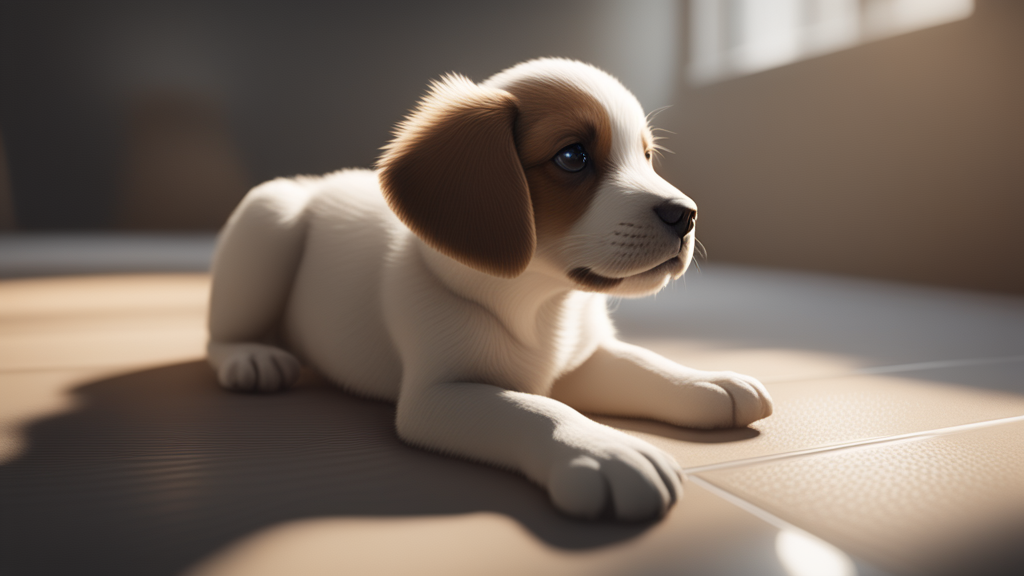
- Crate your puppy with a safe chew.
- Step a few feet away.
- Return before distress begins.
- Increase distance gradually.
Then:
- Leave the room briefly
- Return calmly
- Avoid big emotional greetings
You are conditioning:
“People leave. People return. I am safe.”
This step directly prevents separation anxiety later.
Step 6: Practice While You’re Home
A major mistake is only crating when leaving the house.
That creates this pattern:
Crate = Abandonment.
Instead:
- Crate during short home tasks
- Move around casually
- Normalize it
Your puppy learns that crate time isn’t dramatic. It’s routine.
Step 7: Begin Short Absences
When your puppy can stay calm for 20–30 minutes:
- Crate with a safe chew.
- Leave for 5–10 minutes.
- Return calmly.
- Increase duration gradually.
Avoid:
- Sneaking out nervously
- Making departures emotional
- Rushing to comfort minor whining
Predictability reduces stress.
Step 8: Use the Crate for House Training Success
Puppies instinctively avoid soiling their sleeping area.
Use this to your advantage:
- Crate overnight (with potty breaks based on age)
- Crate between supervised sessions
- Immediately take outside after release
General potty timing rule:
- 8–10 weeks: Every 1–2 hours
- 3 months: Every 3 hours
- 4–6 months: 4–5 hours (maximum)
Consistency accelerates house training dramatically.
Step 9: Recognize Normal Whining vs. Panic
Not all crying is equal.
Normal Adjustment:
- Brief protest whining
- Settles within minutes
Distress Signs:
- Escalating, frantic crying
- Excessive drooling
- Scratching intensely
- Refusal to re-enter later
If distress appears, reduce duration and rebuild gradually.
Slow progression creates emotional resilience.
Step 10: Build Duration Gradually
Healthy crate tolerance looks like:
- Puppy enters willingly
- Settles within minutes
- Rests calmly
- Exits relaxed
Avoid sudden jumps in duration.
If yesterday was 20 minutes, don’t jump to 2 hours.
Structure builds security.
Sample Daily Crate Training Schedule (8–10 Week Puppy)
Morning:
- Potty → Breakfast in crate → Short rest
Mid-morning:
- Play → Potty → 20-minute crate session
Afternoon:
- Potty → Play → Crate while you work nearby
Evening:
- Calm crate time before bedtime
Overnight:
- Crate beside your bed (initially)
- Scheduled potty breaks
Proximity reduces nighttime anxiety in young puppies.
Common Crate Training Mistakes to Avoid
Even when following steps, watch for:
- Using crate as punishment
- Leaving puppy crated too long
- Inconsistent rules
- Letting crying always result in release
- Rushing progression
Most crate training failures come from going too fast.
When Is a Puppy Fully Crate Trained?
Typically:
- 2–4 weeks for comfort
- 3–6 months for reliable house training
Signs of success:
- Enters willingly
- Sleeps calmly
- No stress behaviors
- No accidents in crate
Remember: the crate is temporary structure.
Long-term goal?
A self-regulated dog who doesn’t need confinement.
Why Crate Training Matters Beyond Convenience
Done correctly, crate training:
- Builds independence
- Prevents destructive habits
- Speeds house training
- Reduces anxiety
- Creates a lifelong safe space
It’s not about restriction.
It’s about emotional security and freedom for both of you.
A well-trained dog gives you:
- Easier travel
- Flexible schedules
- Lower stress
- Greater confidence as an owner
That’s not just training.
That’s long-term stability.
If Your Puppy Is Struggling
Don’t assume you’ve failed.
Some puppies need:
- Slower pacing
- Higher-value rewards
- A different crate type (covered vs. uncovered)
- Professional guidance
Certified positive-reinforcement trainers (CPDT-KA) can provide structured plans if needed.
Early correction prevents bigger issues later.
Calm Structure Builds Confident Dogs
Your puppy doesn’t need perfection.
They need:
- Consistency
- Patience
- Predictability
- Positive associations
Crate training is less about the crate and more about the emotional experience inside it.
Start slow.
Reward generously.
Increase gradually.
If you want deeper guidance, explore our related guide on how to prevent separation anxiety in puppies. This will help reinforce the independence you’re building right now.
A calm, confident dog begins with small, structured steps.
You’re already on the right path.

FAQ Section: How to Crate Train a Puppy Step-by-Step
1. How long does it take to crate train a puppy?
Most puppies adjust to crate training within 2–4 weeks when introduced gradually. Full comfort and reliable house training take several months depending on age and consistency.
2. Should I put a blanket over my puppy’s crate?
Covering the crate can help some puppies feel secure by reducing stimulation. However, others feel anxious. Observe your puppy’s behavior and adjust based on comfort and ventilation.
3. How do I crate train a puppy at night?
Place the crate near your bed initially to reduce anxiety. Take your puppy out for scheduled potty breaks based on age, and gradually increase nighttime duration as bladder control improves.
4. What if my puppy refuses to enter the crate?
Never force entry. Use treats, toys, and meals to create positive associations. Start with short, voluntary entries and reward every step toward comfort.
5. How often should I crate my puppy during the day?
Use the crate for short rest periods between play, training, and potty breaks. Avoid extended daytime confinement and balance crate time with exercise and interaction.
6. When can I stop using the crate?
You can begin transitioning out of the crate when your puppy is fully house-trained. Make sure it shows no destructive behavior. It should also remain calm when alone. Gradual freedom is key.
Reading Resource
If you’d like further step-by-step support, explore the structured puppy training resources from the American Veterinary Medical Association. Visit AVMA Dog Behavior & Training.
Additionally, find detailed crate training guidance from VCA Animal Hospitals at VCA Crate Training Guide. These veterinary-backed resources reinforce safe and effective crate conditioning methods.
Dog Crate Training Mistakes to Avoid: A Complete Guide for Raising a Calm, Confident Dog

If you’re searching for “dog crate training mistakes to avoid,” chances are something isn’t going as planned.
Maybe your puppy cries the moment you close the crate door.
Maybe your rescue dog refuses to go inside at all.
Or maybe you’re lying awake at 2 a.m., wondering if you’re somehow doing more harm than good.
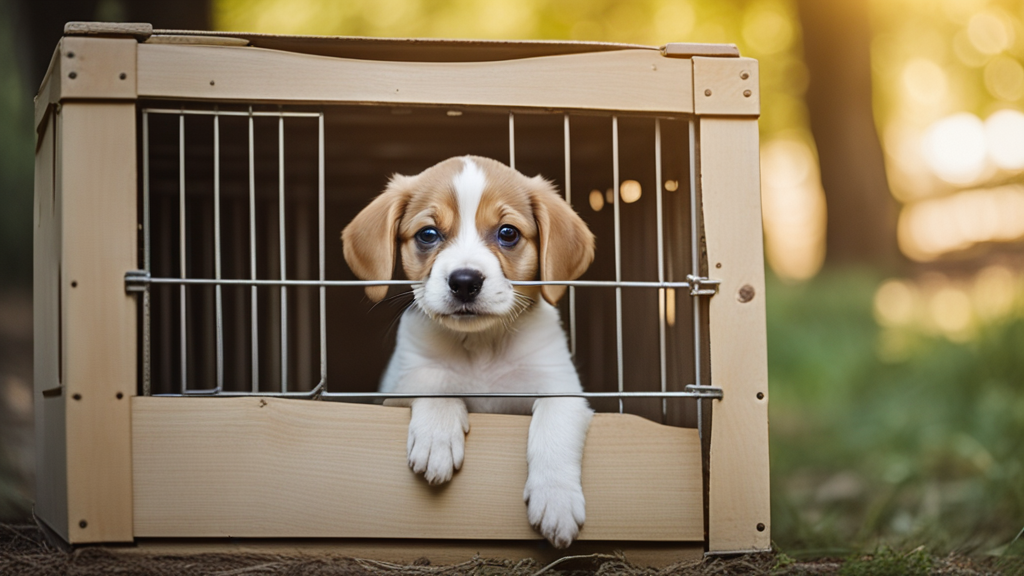
You don’t want a traumatized dog.
You don’t want accidents on the carpet.
You just want a well-adjusted, house-trained companion who feels safe and gives you back your freedom.
You’re not alone.
This guide will walk you through the most common crate training mistakes. It will explain why they happen and how to fix them. This way, you can build trust, structure, and long-term success.
Understanding the Real Purpose of Crate Training
Before diving into the mistakes, we need to clarify something critical:
A crate is not a cage for confinement.
It’s a management and safety tool rooted in canine behavioral science.
Dogs are den animals by instinct. When introduced correctly, a crate becomes:
- A secure retreat
- A house-training accelerator
- A way to prevent destructive behaviors
- A calm-down space during over-stimulation
The American Veterinary Medical Association and leading canine behaviorists consistently emphasize that proper crate training builds predictability. It creates security. It does not create fear.
When done wrong, however, crate training can create anxiety, resistance, and behavioral regression.
Let’s examine where most owners unintentionally go off track.
1. Using the Crate as Punishment
The Mistake:
Sending your dog to the crate after misbehavior.
Why It Backfires:
Dogs form associations quickly. If the crate becomes linked to scolding or isolation, it shifts from “safe den” to “negative consequence.”
That single emotional pairing can undo weeks of progress.
The Long-Term Cost:
- Increased crate resistance
- Heightened separation anxiety
- Fear-based behaviors
What to Do Instead:
Position the crate as a rewarded space:
- Toss treats inside
- Feed meals in the crate
- Offer high-value chews only when crated
The crate should signal safety and positive predictability, not social rejection.
2. Forcing Your Dog Into the Crate
The Mistake:
Physically placing or pushing your dog inside.
Why It Backfires:
This removes agency. Loss of control is one of the primary triggers of canine stress responses.
A dog who feels trapped learns to resist harder next time.
Better Approach:
Use shaping techniques:
- Let the dog approach voluntarily
- Reward small steps (sniffing, stepping in, sitting inside)
- Gradually increase duration
This aligns with positive reinforcement training principles and builds internal confidence instead of compliance through fear.
3. Leaving Your Dog in the Crate Too Long
One of the most common crate training mistakes to avoid is overusing the crate.
General Time Guidelines:
- 8–10 weeks: 30–60 minutes
- 3–6 months: 2–3 hours
- Adult dogs: 4–6 hours (maximum in most cases)
Dogs need:
- Movement
- Social interaction
- Mental stimulation
Excessive confinement can lead to:
- Muscle stiffness
- Frustration behaviors
- House-soiling
- Emotional shutdown
Crate training supports freedom but only when balanced with enrichment and exercise.
4. Choosing the Wrong Crate Size
This mistake is more common than people think.
Too Large:
Dogs eliminate in one corner and sleep in another, slowing house training.
Too Small:
Restricted movement creates discomfort and stress.
Correct Sizing Rule:
Your dog should be able to:
- Stand fully upright
- Turn around comfortably
- Lie down stretched out
For growing puppies, adjustable divider panels are ideal.
Proper sizing directly impacts house-training success rates.
5. Ignoring Emotional State During Training
Many owners focus on mechanics (“in crate = treat”) but overlook emotional signals.
Watch for:
- Excessive panting
- Drooling
- Whining escalating to panic
- Refusal to enter even with rewards
If these, your dog is experiencing crate anxiety, not normal adjustment.
Correction Strategy:
Scale back.
Shorten duration.
Increase positive associations.
Behavioral science calls this “systematic desensitization,” gradual exposure paired with positive reinforcement.
Slow is fast when it comes to emotional conditioning.
6. Making the Crate Too Stimulating
It’s natural to want to make the crate cozy. But overloading it can backfire.
Avoid:
- Excessive toys
- High-traffic placement
- Loud TV noise
The crate should feel like a calm, low-arousal environment.
Place it:
- In a quiet area
- Near (but not in the middle of) family activity
- Away from drafts or extreme temperatures
The goal is emotional regulation, not entertainment.
7. Letting Crying Automatically Mean “Rescue”
This is one of the most misunderstood areas.
Important Distinction:
- Protest whining (brief, fading)
- Panic crying (intense, escalating)
If you immediately open the crate at the first sound, you reinforce noise as a release strategy.
Instead:
- Wait for a brief pause in whining
- Then calmly release
However, if signs of panic are present (drooling, frantic scratching, high-pitched distress), reassess your training pace.
Nuance matters here.
8. Skipping Gradual Alone-Time Conditioning
A major hidden mistake: using the crate only when leaving the house.
This creates a predictive pattern:
Crate = abandonment.
Instead:
- Practice short crate sessions while you’re home
- Move around casually
- Normalize the experience
This builds independence without triggering separation anxiety.
9. Expecting Overnight Results
Crate training is not instant.
Puppies typically take:
- 2–4 weeks for reliable comfort
- Longer for rescue dogs with unknown histories
Frustration often leads to inconsistent training, which confuses the dog.
Consistency builds clarity.
Clarity builds confidence.
Confidence builds long-term behavioral stability.
10. Not Transitioning Properly Out of the Crate
Crates are tools, not permanent housing.
Signs your dog is ready for more freedom:
- Fully house-trained
- No destructive behavior
- Calm alone for extended periods
Gradual transitions:
- Leave crate door open
- Allow supervised free roaming
- Increase access slowly
The end goal isn’t dependence on the crate it’s self-regulation.
The Hidden Cost of Crate Training Mistakes
When crate training goes wrong, the consequences aren’t just logistical.
They affect:
- Trust between you and your dog
- Household stress levels
- Long-term behavioral stability
- Your own freedom and confidence as an owner
Many behavior issues later labeled as “stubbornness” or “anxiety” actually trace back to early management errors.
Fixing them later requires significantly more time and effort than doing it correctly from the start.
A Simple Framework for Successful Crate Training
To avoid the most common dog crate training mistakes, follow this 4-part structure:
1. Association
Crate = food, calm, safety.
2. Gradual Exposure
Increase time slowly and systematically.
3. Emotional Monitoring
Watch body language, not just behavior.
4. Balanced Freedom
Pair crate time with exercise and enrichment.
This framework aligns with modern positive reinforcement training endorsed by veterinary behaviorists.
Common Objections (And Calm Answers)
“Isn’t crate training cruel?”
When done correctly, no.
When misused, yes.
The difference lies in duration, association, and emotional handling.
“My dog hates the crate. Should I give up?”
Not necessarily.
But you need to reset the process and reintroduce it properly.
“What if I work full-time?”
Consider:
- Dog walkers
- Doggy daycare (occasionally)
- A larger safe confinement area (like a playpen)
Crates are management tools, not substitutes for interaction.
The Bigger Picture: Why This Matters
At its core, crate training isn’t about obedience.
It’s about:
- Creating emotional security
- Preventing preventable stress
- Building structured independence
- Giving both you and your dog peace of mind
A calm dog changes everything:
- Easier travel
- Fewer accidents
- Reduced anxiety
- Greater freedom for your lifestyle
You’re not just training behavior.
You’re shaping long-term emotional resilience.
Build Safety, Not Resistance
If you’ve made some of these crate training mistakes, don’t panic.
Dogs are incredibly adaptable.
What matters most is what you do next.
Rebuild positive associations.
Slow the process down.
Stay consistent.
If you wish to explore further, consider evidence-based training resources. Alternatively, consult a certified professional dog trainer (CPDT-KA) specializing in positive reinforcement methods.
Your dog doesn’t need perfection.
They need clarity, safety, and patience.
Start there, and everything else becomes easier.
Below are SEO-optimized FAQ sections tailored for each article.
They are structured for clarity, featured snippet potential, and schema markup compatibility.
FAQ Section: Dog Crate Training Mistakes to Avoid
1. What are the most common dog crate training mistakes to avoid?
The most common dog crate training mistakes include using the crate as punishment. They also involve leaving your dog inside too long, choosing the wrong crate size, forcing entry, and progressing too quickly. These errors can create anxiety and resistance instead of comfort and security.
2. Can crate training cause anxiety in dogs?
Yes, crate training can cause anxiety if it’s rushed, inconsistent, or associated with negative experiences. Proper crate training should build positive associations and gradual independence not fear or confinement stress.
3. How long is too long to leave a dog in a crate?
Puppies under 6 months should not be crated longer than 2–3 hours at a time during the day. Adult dogs typically shouldn’t exceed 4–6 hours. Extended confinement can lead to stress, muscle stiffness, and behavioral issues.
4. Should I ignore my dog crying in the crate?
Brief whining is normal during adjustment. However, intense, escalating crying can indicate panic. It’s important to distinguish between protest whining and true distress before deciding whether to intervene.
5. Is it ever okay to use the crate as discipline?
No. Using the crate as punishment is one of the biggest dog crate training mistakes to avoid. The crate should always represent safety and calm, not correction or isolation.
6. How do I fix crate training mistakes after they happen?
Reset the process by reintroducing the crate slowly with positive reinforcement. Short sessions, food rewards, calm behavior modeling, and gradual duration increases can rebuild trust and comfort.
Recommended Resources
For additional expert guidance on proper crate training techniques, review the American Kennel Club’s training resources at AKC Training Advice.
To avoid common behavioral setbacks, check the Humane Society’s crate training recommendations at Humane Society Crate Training Guide. Both provide evidence-based insights to help ensure your dog develops healthy crate associations.
History of Dogs: Why Breed Origins Still Shape the Dogs We Live With Today
The history of dogs is often treated as a curiosity, interesting, but optional. Many dog lovers assume that choosing a companion is mostly about appearance, popularity, or a fleeting emotional connection. A fluffy coat, an expressive face, or a breed trending on social media feels like enough. After all, dogs are adaptable… aren’t they?
Yet beneath that assumption is a quiet tension many people feel but rarely articulate. They sense that something didn’t quite match expectations. The dog they adore still feels oddly mismatched to their daily rhythm, energy level, or environment. Walks feel harder than expected. Training feels heavier. Guilt quietly replaces excitement.
This frustration doesn’t come from lack of care or commitment. It comes from a belief that modern dogs are detached from their past. Centuries of purpose, selection, and survival no longer matter in a contemporary home. The idea feels reasonable in a world of apartments, designer foods, and obedience classes.
But the History of Dogs tells a different story. One that suggests the past is not behind us at all. It’s still very much alive. It shapes behavior, health, instincts, and compatibility. These elements quietly influence every dog-owner relationship.
Why “Just Pick the Breed You Like” Rarely Works
The history of dogs shows that breeds were never created to be neutral companions. They were shaped to solve specific human problems, guarding, hunting, herding, hauling, or companionship under precise conditions. When modern choices ignore that reality, confusion often follows.
A dog bred for endurance doesn’t suddenly become calm because it lives in a city. A guardian breed doesn’t lose vigilance because the threat is now hypothetical. These instincts don’t disappear; they redirect. Often into behaviors people label as “difficult,” “stubborn,” or “unexpected.”
This is where overwhelm creeps in. Faced with hundreds of breeds and conflicting advice, many people default to aesthetics or trends simply to move forward. The choice feels personal, but it’s often disconnected from deeper context. When friction arises later, it feels like personal failure rather than structural mismatch.
What the History of Dogs reveals is gentler: nothing is “wrong.” The dog is simply expressing traits refined over generations. The disconnect lies not in effort, but in understanding.
Seen this way, breed challenges stop feeling random. They start making sense. And meaning has a calming effect; it replaces self-blame with clarity.
History of Dogs as a Record of Human Needs
The history of dogs is inseparable from human history. Dogs didn’t evolve in isolation; they evolved alongside human survival strategies. Every trait was shaped by necessity, environment, and partnership.
In harsh climates, dogs needed thick coats, independence, and stamina. In agrarian societies, precision, responsiveness, and focus mattered more. In guarding roles, suspicion and loyalty weren’t flaws; they were features. Over time, these needs etched themselves into genetics.
This perspective reframes breed traits as historical artifacts rather than personality quirks. Energy levels, prey drive, vocalization, and even sociability were once solutions, not inconveniences. They worked exceptionally well in the context they were designed for.
Modern life often removes the original job but keeps the instincts intact. The dog doesn’t know the job is obsolete. The History of Dogs explains why unmet purpose often manifests as anxiety, destructiveness, or restlessness.
Understanding this isn’t about control, it’s about respect. When behavior is seen as inherited intention rather than misbehavior, the relationship subtly shifts from frustration to empathy.
When Evolution Outpaces Awareness
The history of Dogs moves slowly. Human lifestyles change fast. This mismatch creates tension. The issue arises not because dogs can’t adapt. It happens because adaptation without understanding often feels like a compromise on both sides.
Selective breeding intensified certain traits long before modern constraints existed. Speed, scent sensitivity, guarding instincts, and endurance were exaggerated because they were valuable. In a living room, those same traits can feel amplified rather than helpful.
Many people sense this gap but interpret it incorrectly. They assume the issue is training technique, discipline, or even personality conflict. Few consider that they’re living with a living expression of ancient function.
This realization changes the emotional tone of ownership. Instead of asking, “Why won’t my dog just relax?” the question becomes, “What was this dog built to do?” That subtle shift replaces resistance with curiosity.
The history of Dogs doesn’t demand lifestyle perfection. It simply invites awareness. And awareness reduces friction long before any solution is considered.
Compatibility Is Historical, Not Trend-Based
The history of Dogs reveals compatibility as something deeper than preference. True alignment isn’t about liking a breed, it’s about living with the consequences of its past.
Two people can love the same dog and experience entirely different realities. Energy tolerance, noise sensitivity, time availability, and emotional expectations all interact with breed traits shaped long before either existed.

When people choose based on trends, they’re often borrowing someone else’s lifestyle without realizing it. The dog becomes a symbol rather than a system. Over time, that symbolism erodes under daily reality.
But when breed history is acknowledged, something stabilizes. Expectations become realistic. Frustrations feel predictable. Small challenges stop escalating into emotional strain.
History of Dogs quietly suggests that harmony isn’t accidental. It’s contextual. And context always starts in the past.
The Hidden Health Story Written in the Past
The history of Dogs isn’t only behavioral, it’s biological. Breeding for specific tasks shaped bodies as much as minds. Skeletal structure, respiratory capacity, digestion, and even lifespan were influenced by function.
When those bodies are placed into environments that contradict their design, health issues often emerge. This isn’t punishment or inevitability; it’s misalignment.
Understanding breed history reframes health conversations. Instead of reacting to problems, people begin to recognize patterns. Awareness doesn’t remove risk, but it reduces surprise.
This perspective builds trust. Not in advice or trends but in understanding. And trust is what makes future decisions feel grounded rather than reactive.
A Quieter, More Grounded Way to Choose
History of Dogs doesn’t tell people what to choose. It changes how choice feels. Decisions stop being rushed. Overwhelm softens into discernment.
When people internalize that breeds are historical narratives, not blank slates, they naturally slow down. Curiosity replaces urgency. Reflection replaces impulse.
This shift doesn’t remove emotion, it deepens it. Connection feels earned, not accidental. The relationship begins with respect rather than expectation.
And once that belief settles in, future choices, training, environment, and routines feel intuitive. Not because someone was told what to do, but because they see their dog clearly.
History of Dogs doesn’t end at adoption. It continues living, breathing, and influencing every shared day.
Conclusion: Seeing Dogs as They Truly Are
The History of Dogs quietly challenges the idea that modern life has erased ancient purpose. It suggests that the past is still present, shaping relationships in subtle yet powerful ways.
When people stop seeing breeds as trends and start seeing them as histories, something shifts internally. Frustration gives way to understanding. Confusion becomes clarity. Choice becomes alignment.
This isn’t about doing more. It’s about seeing differently.
And once that lens changes, it rarely changes back.
Frequently Asked Questions
1. Why does the history of dogs still matter if dogs live such different lives today?
The history of dogs matters because it shaped instincts, energy levels, and stress responses that still exist beneath modern routines. Even in contemporary homes, dogs express traits refined over centuries. Understanding that history explains why certain behaviors consistently, regardless of training style or environment.
2. Is choosing a dog based on breed history more important than personality?
Personality matters, but breed history provides the framework within which personality operates. The history of dogs shows that temperament isn’t random; it’s influenced by what a breed was designed to do. Personality differences exist, but they unfold inside inherited behavioral boundaries.
3. Does understanding the history of dogs mean certain breeds aren’t suitable for modern homes?
Not at all. The history of dogs doesn’t disqualify breeds; it contextualizes them. Many dogs thrive in modern settings when their historical traits are understood and respected. Awareness helps owners anticipate needs rather than feeling surprised by them.
4. Can mixed-breed dogs benefit from understanding dog history too?
Yes. Mixed-breed dogs carry layered histories that often explain complex or seemingly contradictory behaviors. Knowing the historical functions behind breed influences can make their actions feel less confusing and more interpretable.
5. How does breed history affect a dog’s health and longevity?
The history of dogs shaped physical structures, metabolism, and resilience. When modern lifestyles clash with those inherited designs, health issues can emerge. Understanding breed history helps owners recognize predispositions rather than viewing health challenges as sudden or inexplicable.
6. What changes when someone truly understands the history of dogs?
What changes is perception. Behavior stops feeling personal or frustrating and starts feeling meaningful. The history of dogs reframes ownership as a relationship with a living legacy, not a blank slate. This shift often leads to calmer expectations. It also fosters a deeper connection.
Useful Resources
Readers who want to deepen their understanding of how canine history shapes modern breeds and behavior have options. A couple of well-established resources stand out. The American Kennel Club (AKC) offers detailed breed histories.
These histories explain why dogs were developed the way they were. They connect origin stories to temperament and traits. For a broader, more evolutionary perspective, the National Geographic Dogs resource explores the history of dogs through science.
How to Potty Train a Puppy Step by Step ( Why Most People Get It Wrong)

Imagine This for a Moment…
If you’re searching for how to potty train a puppy step by step, you’re probably excited about your new puppy. However, you are exhausted by the accidents and mixed signals. The good news is this: potty training isn’t failing because your puppy is stubborn. It usually breaks down because the process doesn’t match how puppies actually learn.
You’re standing in your kitchen. You have coffee in hand. You feel proud because your puppy almost made it outside. Almost. There’s that familiar sinking feeling again, confusion, frustration, maybe even a flicker of guilt.
You’ve been patient. You’ve said “no.” You’ve taken them out a lot.
So why does it still feel like your puppy just isn’t getting it?
Here’s the truth most new puppy owners don’t hear early enough:
Potty training problems are rarely about stubborn puppies.
They’re about misunderstood timing, unclear signals, and human expectations that don’t match a puppy’s brain yet.
Once that clicks, potty training stops feeling like chaos and starts feeling predictable.
The Most Common (and Costly) False Belief About Puppy Potty Training
“My Puppy Knows Better… They’re Just Not Listening”
It feels personal when your puppy pees five minutes after coming inside. Your brain naturally fills in the story:
They’re disobedient. They’re being difficult. They’re not learning.
But puppies don’t think in moral terms like “right” or “wrong.”
They think in patterns, instincts, and immediate feedback loops.
When accidents happen, it’s not defiance, it’s data.
And once you learn how to read that data, potty training becomes dramatically easier.
The Real Problem: Puppies Learn Through Timing, Not Rules
Puppies don’t generalize well at first.
“Outside is where I pee” doesn’t automatically transfer from your backyard to your neighbor’s lawn. It also does not transfer from morning to evening.
They learn through:
- Repetition
- Predictable timing
- Immediate consequences (good or bad)
- Environmental cues
If any of those pieces are inconsistent, learning slows down, no matter how smart or eager your puppy is.
That’s why a true step-by-step potty training approach works better than random tips.
Step 1: Understand Your Puppy’s Biological Clock
When Puppies Actually Need to Go
Most accidents happen because humans overestimate bladder control.
As a rule of thumb:
- Puppies can hold it about one hour per month of age, max
- Excitement, play, fear, or drinking water shortens that window
Your puppy almost always needs to go:
- Right after waking up
- Within 5–15 minutes after eating
- After intense play
- After training sessions
- Before bedtime
Miss one of these windows, and an accident isn’t surprising; it’s predictable.
Reframe:
Your puppy didn’t “forget.” You missed a biological deadline.
Step 2: Pick One Potty Spot (and Make It Boring)
Why Consistency Beats Freedom Early On
To your puppy, the world is full of smells, textures, and distractions.
If every potty trip is an adventure, their brain focuses on everything except peeing.
Choose:
- One outdoor spot
- The same path to get there
- The same leash
- The same calm energy from you
Stand still. Don’t play. Don’t talk much.
When the environment stays boring, the body takes over.
Step 3: Timing the Reward Is Everything
The 3-Second Rule That Changes Everything
Your puppy’s brain connects actions and outcomes within seconds, not minutes.
That means:
- Praise or reward must happen immediately after they finish
- Waiting until you’re back inside is too late
- Scolding after an accident teaches fear, not understanding
When done right, your puppy starts thinking:
“This feeling of relief + happiness happens outside.”
That emotional association is far more powerful than commands.
Step 4: Learn to Read Pre-Potty Signals
Puppies Always Signal—We Just Miss It
Before an accident, most puppies show subtle cues:
- Sudden sniffing
- Circling
- Wandering away from you
- Freezing mid-play
- Heading toward doors or corners
At first, these signals last seconds. Over time, they become clearer if you respond consistently.
Every time you catch a signal and guide them outside, you strengthen the communication loop.
Soon, your puppy learns:
“When I feel this sensation, I should move toward the door.”
That’s real training, not punishment.
Step 5: Accidents Are Feedback, Not Failure
What to Do When an Accident Happens
Accidents feel emotional, but they’re neutral learning moments.
Do this:
- Interrupt gently if you catch them mid-accident (a clap or calm “ah-ah”)
- Take them outside immediately
- Clean thoroughly with enzymatic cleaner (odor = repeat behavior)
- Mentally note why it happened (timing, distraction, missed signal)
Do not:
- Rub their nose in it
- Yell
- Assume they “know better”
Fear shuts down learning. Clarity speeds it up.
Step 6: Crates and Confinement Are Tools, Not Punishments
Why Structure Creates Freedom
Puppies naturally avoid soiling their sleeping area. A properly sized crate:
- Helps regulate bladder timing
- Prevents unsupervised accidents
- Creates predictable potty routines
The crate isn’t about control; it’s about reducing confusing choices while habits form.
Freedom comes later, after consistency.
Step 7: Your Energy Sets the Pace
Puppies Mirror Emotional States
If potty training feels stressful, rushed, or tense, your puppy absorbs that.
Calm repetition works faster than frustration.
Predictability builds trust.
Trust accelerates learning.
When you approach each potty break as a neutral routine, not a test, you remove pressure from both of you.
The Turning Point Most Owners Don’t Expect
One day, something subtle happens.
Your puppy pauses play.
Looks at you.
Moves toward the door.
That’s not coincidence.
That’s communication.
And it only happens when your puppy feels safe, understood, and consistently guided.
Why Potty Training Is Really About Understanding—Not Control
When you stop trying to force learning and start supporting natural instincts, everything shifts.
Your puppy isn’t stubborn.
They’re learning a human-made rule with an animal brain.
Once you align with how that brain works, potty training becomes less about correcting mistakes and more about reinforcing success.
And that understanding?
It carries forward into every aspect of training that comes next.
Frequently Asked Questions (For How to Potty Train a Puppy Step by Step)
1. How long does it take to potty train a puppy step by step?
Most puppies begin to show real consistency within 2–4 weeks when training is done correctly. Full reliability usually develops by 4–6 months of age, depending on breed, routine, and consistency. Progress isn’t linear; temporary setbacks are normal and don’t mean training has failed.
2. Why does my puppy have accidents right after coming inside?
This almost always happens because the puppy was distracted outdoors and didn’t fully empty their bladder. Puppies often need calm, boring potty trips at first. If play, smells, or movement take priority, the urge returns minutes later, right when you think you’re safe.
3. Is my puppy being stubborn or ignoring me on purpose?
No. Puppies don’t yet understand human rules or expectations. What looks like stubbornness is usually a timing mismatch or a missed signal. Puppies learn through patterns and immediate feedback, not logic or delayed consequences.
4. Should I punish my puppy for potty accidents?
Punishment is not recommended. It often creates fear and confusion, which can slow potty training and lead to hidden accidents. Instead, accidents should be treated as feedback helping you adjust timing, supervision, or routine going forward.
5. How do I know when my puppy needs to go outside?
Common signals include sudden sniffing, circling, wandering away, pausing play, or heading toward a door or corner. At first, these signals are subtle and brief. With consistent responses, your puppy learns to make them clearer over time.
6. Does crate training really help with potty training?
Yes, when used properly. A correctly sized crate helps puppies develop bladder awareness and prevents unsupervised accidents. It’s not a punishment, but a structure tool that makes potty timing more predictable and learning faster.
Extra Resources
If you’d like to reinforce what you’ve learned here, seek expert-backed guidance. The American Kennel Club’s puppy potty training guide offers clear, vet-approved explanations of timing, routines, and puppy development.
You also find the ASPCA’s housetraining resource helpful. It provides an understanding of accidents through the lens of canine behavior and learning. This approach sees accidents as leanings, not disobedience.
The Biggest Lie About the Best Dog Food for Small Breeds
Most people believe the best dog food for small breeds is simply the one with the biggest brand name. Some think it’s the prettiest bag. Others choose based on the highest price tag.
You’ve been in the pet food aisle. Or you’ve scrolled endlessly online. If you’re honest, you’ve probably been thinking:
“If this brand is popular… it must be good.”
“If it costs more… it must be healthier.”
“If my dog eats it without complaining… I guess it’s fine.”
That assumption feels logical. Safe, even. And you didn’t arrive at it randomly. It was installed by years of marketing, vet-shelf displays, influencer opinions, and well-meaning advice from other dog owners.
But here’s the uncomfortable truth most small dog owners never hear:
Brand reputation and price are not reliable indicators of what your small dog actually needs.
And that realization once it clicks, changes everything.
“I Just Want to Do Right by My Dog”
If you love a small dog, you know the feeling.
They’re not just pets.
They’re shadows that follow you room to room.
They’re warm bundles of personality curled next to you on the couch.
They’re family.
So when it comes to food, the pressure feels heavy.
You want to give them the best dog food for small breeds. It should not just keep them full. It should also protect their health, their energy, and their longevity.
Yet the more you try to research, the more confusing it becomes.
One article praises grain-free.
Another warns against it.
One brand claims “human-grade.”
Another promises “vet approved.”
Suddenly, what should feel like a loving choice turns into mental overload.
And quietly, a doubt creeps in:
“What if I’m missing something important?”
The Assumption No One Told You You Were Making
Without realizing it, most small dog owners are operating under a silent belief:
Choosing the best dog food for small breeds is about finding the “right” brand.
Not the right nutrition.
Not the right fit.
The right brand.
This belief isn’t foolish. It’s inherited.
Marketing teaches us to outsource thinking.
Logos replace understanding.
Price replaces discernment.
And when it comes to dog food, especially for small breeds, this shortcut feels comforting.
But it also hides the real issue.
Why This Was Never Your Fault
Let’s remove the blame right now.
You weren’t failing at choosing dog food.
You weren’t careless.
You weren’t uninformed.
You were simply trying to solve the wrong problem.
You were taught to ask:
“Which brand should I trust?”
When the better question was always:
“What does my small dog actually need?”
Once you see this, the frustration softens.
The confusion makes sense.
And the pressure lifts.
The Overlooked Reality of Small Breed Nutrition
Small dogs are not “tiny big dogs.”
They live faster.
They burn energy differently.
They age uniquely.
They eat less but require more precision.
A Chihuahua, a Pomeranian, and a Yorkie all fit in a tote bag, but their nutritional needs are particular.
The best dog food for small breeds isn’t about stuffing nutrients into a smaller kibble.
It’s about balance.
Small dogs often need:
- Higher nutrient density per bite
- Thoughtful fat-to-protein ratios
- Ingredients that support dental health, digestion, and metabolic efficiency
When these needs are misunderstood, problems don’t occur overnight.
They whisper first.
Subtle weight gain.
Less enthusiasm at mealtime.
Dull coats.
Digestive quirks you chalk up to “just how they are.”
But these aren’t personality traits.
They’re signals.
Why “Good Enough” Often Feels Like the Best Option
Here’s what happens to many caring owners:
Your dog eats the food.
They don’t get sick.
They seem… fine.
So your brain closes the loop:
“This must be working.”
And maybe, in the short term, it is.
But fine is a low bar for a being you love deeply.
The challenge with dog food, especially for small breeds, is that the consequences are delayed.
Nutrition is quiet.
It compounds.
It shows up years later as vitality… or its absence.
This is why so many people only question their choices after a health scare—when the damage has already begun.
A New Way to Think About the Best Dog Food for Small Breeds
Instead of asking, “Which brand is best?”
Consider this shift:
The best dog food for small breeds is the one that aligns with how small bodies actually function.
This mental model changes everything.
Now you’re no longer searching for approval from packaging.
You’re evaluating alignment.
Does this food respect portion sensitivity?
Does it treat ingredients as building blocks, not fillers?
Does it acknowledge that small dogs experience nutrition differently?
When you adopt this lens, confusion turns into clarity.
Not because you suddenly know everything, but because you finally know what matters.
Why Other Advice Never Fully Helped
You’ve probably heard well-unmentioned guidance like:
“Just buy premium.”
“Small dogs aren’t that different.”
“If your dog eats it, it’s fine.”
Each statement contains a grain of truth, but none address the core.
They treat symptoms, not systems.
They assume uniformity where individuality exists.
And most importantly, they don’t empower you, the person who knows their dog best, to think critically.
The Quiet Confidence of Informed Owners
Something subtle happens when owners understand nutrition instead of outsourcing it.
They stop feeling anxious in the pet food aisle.
They stop jumping between trends.
They stop second-guessing every purchase.
They develop a calm certainty. It arises not because they’ve found a “perfect” brand. Instead, it is because they understand the principles behind good food.
And that confidence shows up in their dog.
More consistent energy.
Better digestion.
A sense that things are working with their dog, not against them.
This Isn’t about perfection, it’s About Awareness
No dog food is flawless.
No owner gets it right 100% of the time.
The goal isn’t nutritional purity.
The goal is awareness.
When you understand what truly defines the best dog food for small breeds, you stop being swayed by noise. You start making grounded, thoughtful decisions.
And once that belief is installed, future choices become easier.
More natural.
Almost inevitable.
The Belief That Changes Everything
Here’s the idea worth holding onto:
Your dog’s health isn’t determined by brand loyalty, it’s shaped by nutritional understanding.
Once you see that, you can’t unseen it.
You start reading labels differently.
You hear marketing claims with a more discerning ear.
You trust yourself more.
And without pressure, hype, or urgency…
You find yourself making better choices—almost automatically.
Not because someone told you what to buy.
But because now, you finally know what matters.
Frequently Asked Questions
1. What makes the best dog food for small breeds different from regular dog food?
The best dog food for small breeds isn’t about smaller kibble alone; it’s about nutritional alignment. Small dogs have faster metabolisms, different energy needs, and less margin for error with portions. Food that works well for larger dogs can quietly fall short for smaller bodies over time.
2. Is a more expensive brand always better for small dogs?
Not necessarily. Price often reflects marketing, sourcing, or packaging, not whether the food truly matches small breed nutritional needs. Understanding ingredient quality and nutrient balance matters more than assuming higher cost equals better health outcomes.
3. My small dog seems fine—why should I rethink their food?
“Fine” is often a short-term signal. Nutrition works gradually, influencing energy, digestion, coat quality, and long-term health. Many small dog owners only recognize nutritional gaps after issues. This is why awareness now can make a meaningful difference later.
4. Are small dogs really that different nutritionally from large dogs?
Yes, in subtle but important ways. Small dogs eat less food overall, so every bite carries more importance. Their nutritional needs require precision rather than volume, making ingredient quality and balance especially impactful.
5. How can I tell if dog food marketing claims are meaningful?
A helpful mindset shift is to look beyond claims like “premium,” “natural,” or “vet approved.” Instead, focus on what the food is designed to support. Marketing speaks to emotion; nutrition speaks to function. Understanding that distinction brings clarity.
6. Do I need to find a “perfect” food to support my small dog’s health?
No, and that’s a relief. There is no single perfect option. What matters is choosing food based on understanding rather than habit or assumption. Informed decisions, even imperfect ones, support better long-term outcomes than blind brand loyalty.
Reader-Trusted Resources
If you want to understand what actually impacts your dog’s health beyond marketing claims, you should go deeper. The Association of American Feed Control Officials (AAFCO) offers foundational insights. It explains how pet food is nutritionally defined and evaluated.